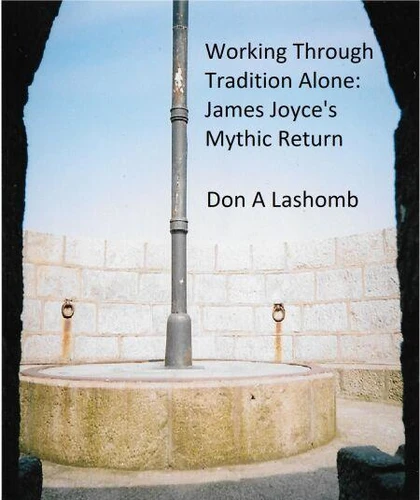
Working Through Tradition Alone: James Joyce's Mythic Return
Par :Formats :
Disponible dans votre compte client Decitre ou Furet du Nord dès validation de votre commande. Le format ePub est :
- Compatible avec une lecture sur My Vivlio (smartphone, tablette, ordinateur)
- Compatible avec une lecture sur liseuses Vivlio
- Pour les liseuses autres que Vivlio, vous devez utiliser le logiciel Adobe Digital Edition. Non compatible avec la lecture sur les liseuses Kindle, Remarkable et Sony
 , qui est-ce ?
Notre partenaire de plateforme de lecture numérique où vous retrouverez l'ensemble de vos ebooks gratuitement
Pour en savoir plus sur nos ebooks, consultez notre aide en ligne ici
C'est si simple ! Lisez votre ebook avec l'app Vivlio sur votre tablette, mobile ou ordinateur :

- FormatePub
- ISBN978-0-463-17856-0
- EAN9780463178560
- Date de parution28/05/2020
- Protection num.pas de protection
- Infos supplémentairesepub
- ÉditeurBluewater
Résumé
Though much has been written on Joyce and mythology, this thesis explains the necessary link between myth-oriented literature and Joyce's appropriation of materials from external sources. The study focuses primarily on Finnegans Wake but devotes significant attention to Ulysses as well. Though Joyce was an individualistic twentieth-century writer, his last book integrates and remixes older traditions of collective authorship, and in particular we find many recurrences of elements from Irish mythology and folklore.
The strange words of Finnegans Wake often prove alterations of other authors' sentences. Much as each bard of an oral tradition would overhear and then reuse the stories, motifs, and even wordings of other bards in the production of his/her 'own' songs, Joyce seems to have regarded any and all texts he read as potential precursors to portions of Finnegans Wake, which he likened to 'pure music'. Chapter 1 investigates Joyce's reappropriation of preexistent elements, situates his work in relation to various myth-oriented literatures, and parallels aspects of his authorship with the roles of the Irish filí and druids.
Chapter 2 explores how the returns of myth in Finnegans Wake depend upon felicitous states of knowledge-deficiency. Joyce's readers must use their imaginations to make sense of the difficult text much in the way that Vico's ignorant 'first people' created gods to explain their world. Chapter 3 discusses Joyce's affinity with James Clarence Mangan regarding Irish tradition, and also differentiates Joyce's work from the project of the Irish Literary Revival.
Chapter 4 examines the dichotomy between orality and writing in Finnegans Wake. The fox of Irish fables becomes an allegory for the poet who mediates between oral culture and tradition-binding literature. Lastly, Chapter 5 discusses themes of plagiarism and piracy in Finnegans Wake, noting that the appropriation of readymade materials is often considered criminal in the present age.
The strange words of Finnegans Wake often prove alterations of other authors' sentences. Much as each bard of an oral tradition would overhear and then reuse the stories, motifs, and even wordings of other bards in the production of his/her 'own' songs, Joyce seems to have regarded any and all texts he read as potential precursors to portions of Finnegans Wake, which he likened to 'pure music'. Chapter 1 investigates Joyce's reappropriation of preexistent elements, situates his work in relation to various myth-oriented literatures, and parallels aspects of his authorship with the roles of the Irish filí and druids.
Chapter 2 explores how the returns of myth in Finnegans Wake depend upon felicitous states of knowledge-deficiency. Joyce's readers must use their imaginations to make sense of the difficult text much in the way that Vico's ignorant 'first people' created gods to explain their world. Chapter 3 discusses Joyce's affinity with James Clarence Mangan regarding Irish tradition, and also differentiates Joyce's work from the project of the Irish Literary Revival.
Chapter 4 examines the dichotomy between orality and writing in Finnegans Wake. The fox of Irish fables becomes an allegory for the poet who mediates between oral culture and tradition-binding literature. Lastly, Chapter 5 discusses themes of plagiarism and piracy in Finnegans Wake, noting that the appropriation of readymade materials is often considered criminal in the present age.
A propos de Don A Lashomb
Akrasia
E-book
9,49 €
27,99 €