SOLDES
Jusqu'à -70% sur une sélection d'articles*

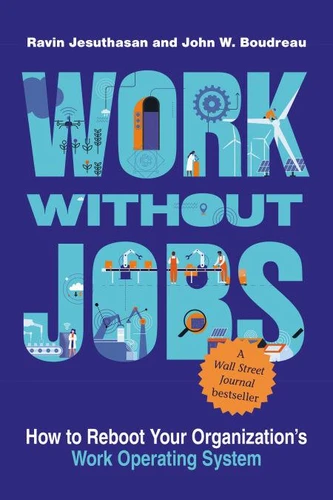
Work without Jobs. How to Reboot Your Organization’s Work Operating System
Par : ,Formats :
Disponible dans votre compte client Decitre ou Furet du Nord dès validation de votre commande. Le format ePub protégé est :
- Compatible avec une lecture sur My Vivlio (smartphone, tablette, ordinateur)
- Compatible avec une lecture sur liseuses Vivlio
- Pour les liseuses autres que Vivlio, vous devez utiliser le logiciel Adobe Digital Edition. Non compatible avec la lecture sur les liseuses Kindle, Remarkable et Sony
- Non compatible avec un achat hors France métropolitaine
 , qui est-ce ?
Notre partenaire de plateforme de lecture numérique où vous retrouverez l'ensemble de vos ebooks gratuitement
Pour en savoir plus sur nos ebooks, consultez notre aide en ligne ici
C'est si simple ! Lisez votre ebook avec l'app Vivlio sur votre tablette, mobile ou ordinateur :

- Nombre de pages232
- FormatePub
- ISBN978-0-262-36823-0
- EAN9780262368230
- Date de parution29/03/2022
- Protection num.Adobe DRM
- Taille3 Mo
- Infos supplémentairesepub
- ÉditeurThe MIT Press
Résumé
In this Wall Street Journal bestseller, why the future of work requires the deconstruction of jobs and the reconstruction of work. Work is traditionally understood as a "job, " and workers as "jobholders." Jobs are structured by titles, hierarchies, and qualifications. In Work without Jobs, the Wall Street Journal bestseller, Ravin Jesuthasan and John Boudreau propose a radically new way of looking at work.
They describe a new "work operating system" that deconstructs jobs into their component parts and reconstructs these components into more optimal combinations that reflect the skills and abilities of individual workers. In a new normal of rapidly accelerating automation, demands for organizational agility, efforts to increase diversity, and the emergence of alternative work arrangements, the old system based on jobs and jobholders is cumbersome and ungainly.
Jesuthasan and Boudreau's new system lays out a roadmap for the future of work. Work without Jobs presents real-world cases that show how leading organizations are embracing work deconstruction and reinvention. For example, when a robot, chatbot, or artificial intelligence takes over parts of a job while a human worker continues to do other parts, what is the "job"? DHL found some answers when it deployed social robotics at its distribution centers.
Meanwhile, the biotechnology company Genentech deconstructed jobs to increase flexibility, worker engagement, and retention. Other organizations achieved agility with internal talent marketplaces, worker exchanges, freelancers, crowdsourcing, and partnerships. It's time for organizations to reboot their work operating system, and Work without Jobs offers an essential guide for doing so.
They describe a new "work operating system" that deconstructs jobs into their component parts and reconstructs these components into more optimal combinations that reflect the skills and abilities of individual workers. In a new normal of rapidly accelerating automation, demands for organizational agility, efforts to increase diversity, and the emergence of alternative work arrangements, the old system based on jobs and jobholders is cumbersome and ungainly.
Jesuthasan and Boudreau's new system lays out a roadmap for the future of work. Work without Jobs presents real-world cases that show how leading organizations are embracing work deconstruction and reinvention. For example, when a robot, chatbot, or artificial intelligence takes over parts of a job while a human worker continues to do other parts, what is the "job"? DHL found some answers when it deployed social robotics at its distribution centers.
Meanwhile, the biotechnology company Genentech deconstructed jobs to increase flexibility, worker engagement, and retention. Other organizations achieved agility with internal talent marketplaces, worker exchanges, freelancers, crowdsourcing, and partnerships. It's time for organizations to reboot their work operating system, and Work without Jobs offers an essential guide for doing so.