Wonder. Childhood and the Lifelong Love of Science
Par :Formats :
Disponible dans votre compte client Decitre ou Furet du Nord dès validation de votre commande. Le format ePub protégé est :
- Compatible avec une lecture sur My Vivlio (smartphone, tablette, ordinateur)
- Compatible avec une lecture sur liseuses Vivlio
- Pour les liseuses autres que Vivlio, vous devez utiliser le logiciel Adobe Digital Edition. Non compatible avec la lecture sur les liseuses Kindle, Remarkable et Sony
- Non compatible avec un achat hors France métropolitaine
 , qui est-ce ?
Notre partenaire de plateforme de lecture numérique où vous retrouverez l'ensemble de vos ebooks gratuitement
Pour en savoir plus sur nos ebooks, consultez notre aide en ligne ici
C'est si simple ! Lisez votre ebook avec l'app Vivlio sur votre tablette, mobile ou ordinateur :

- Nombre de pages336
- FormatePub
- ISBN978-0-262-36845-2
- EAN9780262368452
- Date de parution01/03/2022
- Protection num.Adobe DRM
- Taille7 Mo
- Infos supplémentairesepub
- ÉditeurThe MIT Press
Résumé
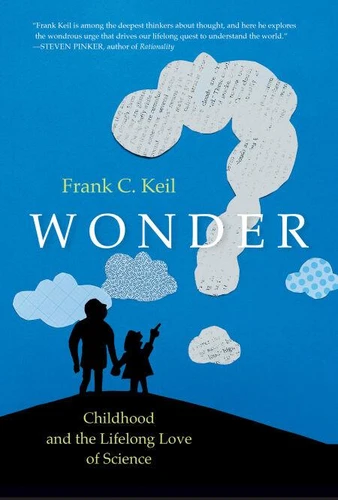
How we can all be lifelong wonderers: restoring the sense of joy in discovery we felt as children. From an early age, children pepper adults with questions that ask why and how: Why do balloons float? How do plants grow from seeds? Why do birds have feathers? Young children have a powerful drive to learn about their world, wanting to know not just what something is but also how it got to be that way and how it works.
Most adults, on the other hand, have little curiosity about whys and hows; we might unlock a door, for example, or boil an egg, with no idea of what happens to make such a thing possible. How can grown-ups recapture a child's sense of wonder at the world? In this book, Frank Keil describes the cognitive dispositions that set children on their paths of discovery and explains how we can all become lifelong wonderers. Keil describes recent research on children's minds that reveals an extraordinary set of emerging abilities that underpin their joy of discovery-their need to learn not just the facts but the underlying causal patterns at the very heart of science.
This glorious sense of wonder, however, is stifled, beginning in elementary school. Later, with little interest in causal mechanisms, and motivated by intellectual blind spots, as adults we become vulnerable to misinformation and manipulation-ready to believe things that aren't true. Of course, the polymaths among us have retained their sense of wonder, and Keil explains the habits of mind and ways of wondering that allow them-and can enable us-to experience the joy of asking why and how.
Most adults, on the other hand, have little curiosity about whys and hows; we might unlock a door, for example, or boil an egg, with no idea of what happens to make such a thing possible. How can grown-ups recapture a child's sense of wonder at the world? In this book, Frank Keil describes the cognitive dispositions that set children on their paths of discovery and explains how we can all become lifelong wonderers. Keil describes recent research on children's minds that reveals an extraordinary set of emerging abilities that underpin their joy of discovery-their need to learn not just the facts but the underlying causal patterns at the very heart of science.
This glorious sense of wonder, however, is stifled, beginning in elementary school. Later, with little interest in causal mechanisms, and motivated by intellectual blind spots, as adults we become vulnerable to misinformation and manipulation-ready to believe things that aren't true. Of course, the polymaths among us have retained their sense of wonder, and Keil explains the habits of mind and ways of wondering that allow them-and can enable us-to experience the joy of asking why and how.