SOLDES
Jusqu'à -70% sur une sélection d'articles*

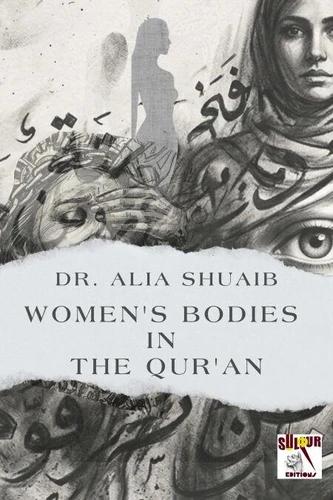
Women's Bodies in the Qur'an
Par :Formats :
Disponible dans votre compte client Decitre ou Furet du Nord dès validation de votre commande. Le format ePub protégé est :
- Compatible avec une lecture sur My Vivlio (smartphone, tablette, ordinateur)
- Compatible avec une lecture sur liseuses Vivlio
- Pour les liseuses autres que Vivlio, vous devez utiliser le logiciel Adobe Digital Edition. Non compatible avec la lecture sur les liseuses Kindle, Remarkable et Sony
- Non compatible avec un achat hors France métropolitaine
 , qui est-ce ?
Notre partenaire de plateforme de lecture numérique où vous retrouverez l'ensemble de vos ebooks gratuitement
Pour en savoir plus sur nos ebooks, consultez notre aide en ligne ici
C'est si simple ! Lisez votre ebook avec l'app Vivlio sur votre tablette, mobile ou ordinateur :

- FormatePub
- ISBN8233626609
- EAN9798233626609
- Date de parution07/03/2026
- Protection num.Adobe DRM
- Infos supplémentairesepub
- ÉditeurLinda Balsamo
Résumé
Women's Bodies in the Qur'an represents a seminal epistemological intervention into Islamic feminist theology, focusing specifically on the hermeneutics of the female form within the Qur'anic corpus. This treatise meticulously uncouples the divine text from centuries of monolithic patriarchal exegesis, which, the author argues, has historically mutated original linguistic semantics into mechanisms of somatic and socio-political control.
Employing a rigorous, multi-disciplinary apparatus-synthesizing modern linguistics, psycholinguistics, and Sartrean existential phenomenology-Shuaib deconstructs central theological tenets that construct Muslim female identity. Across eight complex chapters, the text enacts profound exegesis of contested terms, including Qawwam (Guardianship), Zinah (Adornment), Hijab (The Veil), Fitnah (Seduction), and 'Awrah (Nakedness).
The overarching thesis posits that traditionalist interpretations have systematically enacted an objectifying reduction of women, prioritizing the somatic "exterior" (Being-in-itself) over the agentic, intellectual "interior" (Being-for-itself). By interrogating the historical and psychological anxieties underpinning classical commentaries, the work champions a liberating, counter-hegemonic hermeneutic.
Women's Bodies in the Qur'an is indispensable for scholars of Critical Islamic Theory, Gender Studies, and Philosophy, redefining the boundaries of legitimate scriptural analysis.
Employing a rigorous, multi-disciplinary apparatus-synthesizing modern linguistics, psycholinguistics, and Sartrean existential phenomenology-Shuaib deconstructs central theological tenets that construct Muslim female identity. Across eight complex chapters, the text enacts profound exegesis of contested terms, including Qawwam (Guardianship), Zinah (Adornment), Hijab (The Veil), Fitnah (Seduction), and 'Awrah (Nakedness).
The overarching thesis posits that traditionalist interpretations have systematically enacted an objectifying reduction of women, prioritizing the somatic "exterior" (Being-in-itself) over the agentic, intellectual "interior" (Being-for-itself). By interrogating the historical and psychological anxieties underpinning classical commentaries, the work champions a liberating, counter-hegemonic hermeneutic.
Women's Bodies in the Qur'an is indispensable for scholars of Critical Islamic Theory, Gender Studies, and Philosophy, redefining the boundaries of legitimate scriptural analysis.