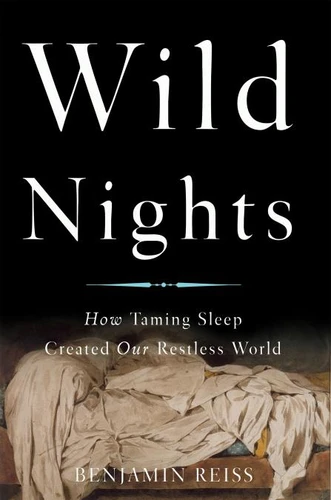
Why the modern world forgot how to sleep Why is sleep frustrating for so many people? Why do we spend so much time and money managing and medicating it, and training ourselves and our children to do it correctly? In Wild Nights, Benjamin Reiss finds answers in sleep's hidden history -- one that leads to our present, sleep-obsessed society, its tacitly accepted rules, and their troubling consequences.
Today we define a good night's sleep very narrowly: eight hours in one shot, sealed off in private bedrooms, children apart from parents. But for most of human history, practically no one slept this way. Tracing sleep's transformation since the dawn of the industrial age, Reiss weaves together insights from literature, social and medical history, and cutting-edge science to show how and why we have tried and failed to tame sleep.
In lyrical prose, he leads readers from bedrooms and laboratories to factories and battlefields to Henry David Thoreau's famous cabin at Walden Pond, telling the stories of troubled sleepers, hibernating peasants, sleepwalking preachers, cave-dwelling sleep researchers, slaves who led nighttime uprisings, rebellious workers, spectacularly frazzled parents, and utopian dreamers. We are hardly the first people, Reiss makes clear, to chafe against our modern rules for sleeping.
A stirring testament to sleep's diversity, Wild Nights offers a profound reminder that in the vulnerability of slumber we can find our shared humanity. By peeling back the covers of history, Reiss recaptures sleep's mystery and grandeur and offers hope to weary readers: as sleep was transformed once before, so too can it change today.
Why the modern world forgot how to sleep Why is sleep frustrating for so many people? Why do we spend so much time and money managing and medicating it, and training ourselves and our children to do it correctly? In Wild Nights, Benjamin Reiss finds answers in sleep's hidden history -- one that leads to our present, sleep-obsessed society, its tacitly accepted rules, and their troubling consequences.
Today we define a good night's sleep very narrowly: eight hours in one shot, sealed off in private bedrooms, children apart from parents. But for most of human history, practically no one slept this way. Tracing sleep's transformation since the dawn of the industrial age, Reiss weaves together insights from literature, social and medical history, and cutting-edge science to show how and why we have tried and failed to tame sleep.
In lyrical prose, he leads readers from bedrooms and laboratories to factories and battlefields to Henry David Thoreau's famous cabin at Walden Pond, telling the stories of troubled sleepers, hibernating peasants, sleepwalking preachers, cave-dwelling sleep researchers, slaves who led nighttime uprisings, rebellious workers, spectacularly frazzled parents, and utopian dreamers. We are hardly the first people, Reiss makes clear, to chafe against our modern rules for sleeping.
A stirring testament to sleep's diversity, Wild Nights offers a profound reminder that in the vulnerability of slumber we can find our shared humanity. By peeling back the covers of history, Reiss recaptures sleep's mystery and grandeur and offers hope to weary readers: as sleep was transformed once before, so too can it change today.


 , qui est-ce ?
