SOLDES
Jusqu'à -70% sur une sélection d'articles*

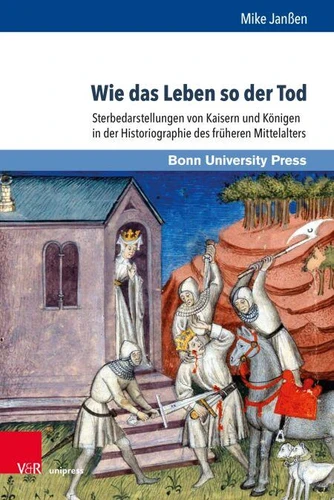
Wie das Leben so der Tod. Sterbedarstellungen von Kaisern und Königen in der Historiographie des früheren Mittelalters
Par :Formats :
Disponible dans votre compte client Decitre ou Furet du Nord dès validation de votre commande. Le format PDF est :
- Compatible avec une lecture sur My Vivlio (smartphone, tablette, ordinateur)
- Compatible avec une lecture sur liseuses Vivlio
- Pour les liseuses autres que Vivlio, vous devez utiliser le logiciel Adobe Digital Edition. Non compatible avec la lecture sur les liseuses Kindle, Remarkable et Sony
 , qui est-ce ?
Notre partenaire de plateforme de lecture numérique où vous retrouverez l'ensemble de vos ebooks gratuitement
Pour en savoir plus sur nos ebooks, consultez notre aide en ligne ici
C'est si simple ! Lisez votre ebook avec l'app Vivlio sur votre tablette, mobile ou ordinateur :

- Nombre de pages480
- FormatPDF
- ISBN978-3-8470-1351-8
- EAN9783847013518
- Date de parution11/10/2021
- Protection num.pas de protection
- Taille11 Mo
- Infos supplémentairespdf
- ÉditeurV&R Unipress
Résumé
Der Tod des Herrschers war zu allen Zeiten ein bedeutsames Ereignis, welches entsprechenden Niederschlag in der Historiographie gefunden hat. Selten jedoch wurden die Berichte über das Ableben der Mächtigen wertfrei verfasst. Chronisten nutzten die Schilderung des Sterbens, um den guten Herrscher zu rühmen oder den schlechten zu verdammen. Den Historiographen oblagen die religiöse Deutung und damit auch die Wertung der zu Lebzeiten erbrachten Taten des Verstorbenen.
Bei der Beschreibung bediente man sich dabei antiker und biblischer Vorbilder. Die vorliegende Studie untersucht die Sterbedarstellungen von Herrschern vom 6. Jahrhundert und dem Tode Chlodwigs I. bis hin zu Lothar von Süpplingenburg im 12. Jahrhundert. The death of a ruler has always been a significant event, which has found corresponding expression in historiography. Rarely were these reports on the death of the powerful written in a value-free manner.
Chroniclers used the description of the death to praise the good ruler or to condemn the bad one. Historiographers were responsible for the religious interpretation and thus also the evaluation of the deceased's deeds during his lifetime. The description of dying was based on ancient and biblical models. This study examines the depictions of the deaths of rulers from the 6th century and the death of Clovis I to Lothar of Süpplingenburg in the 12th century.
Bei der Beschreibung bediente man sich dabei antiker und biblischer Vorbilder. Die vorliegende Studie untersucht die Sterbedarstellungen von Herrschern vom 6. Jahrhundert und dem Tode Chlodwigs I. bis hin zu Lothar von Süpplingenburg im 12. Jahrhundert. The death of a ruler has always been a significant event, which has found corresponding expression in historiography. Rarely were these reports on the death of the powerful written in a value-free manner.
Chroniclers used the description of the death to praise the good ruler or to condemn the bad one. Historiographers were responsible for the religious interpretation and thus also the evaluation of the deceased's deeds during his lifetime. The description of dying was based on ancient and biblical models. This study examines the depictions of the deaths of rulers from the 6th century and the death of Clovis I to Lothar of Süpplingenburg in the 12th century.