SOLDES
Jusqu'à -70% sur une sélection d'articles*

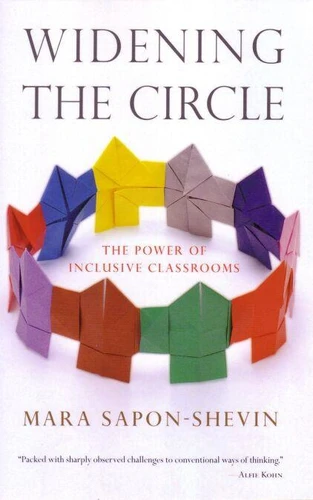
Widening the Circle. The Power of Inclusive Classrooms
Par :Formats :
Disponible dans votre compte client Decitre ou Furet du Nord dès validation de votre commande. Le format ePub protégé est :
- Compatible avec une lecture sur My Vivlio (smartphone, tablette, ordinateur)
- Compatible avec une lecture sur liseuses Vivlio
- Pour les liseuses autres que Vivlio, vous devez utiliser le logiciel Adobe Digital Edition. Non compatible avec la lecture sur les liseuses Kindle, Remarkable et Sony
- Non compatible avec un achat hors France métropolitaine
 , qui est-ce ?
Notre partenaire de plateforme de lecture numérique où vous retrouverez l'ensemble de vos ebooks gratuitement
Pour en savoir plus sur nos ebooks, consultez notre aide en ligne ici
C'est si simple ! Lisez votre ebook avec l'app Vivlio sur votre tablette, mobile ou ordinateur :

- Nombre de pages280
- FormatePub
- ISBN978-0-8070-3281-7
- EAN9780807032817
- Date de parution15/03/2007
- Protection num.Adobe DRM
- Taille2 Mo
- Infos supplémentairesepub
- ÉditeurBeacon Press
Résumé
Widening the Circle is a passionate, even radical argument for creating school and classroom environments where all kids, including children labeled as "disabled" and "special needs, " are welcome on equal terms. In opposition to traditional models of special education, where teachers decide when a child is deemed "ready to compete" in "mainstream" classes, Mara Sapon-Shevin articulates a vision of full inclusion as a practical and moral goal.
Inclusion, she argues, begins not with the assumption that students have to earn their way into the classroom with their behavior or skills, it begins with the right of every child to be in the mainstream of education, perhaps with modifications, adaptations, and support. Full inclusion requires teachers to think about all aspects of their classrooms-pedagogy, curriculum, and classroom climate. Crucially, Sapon-Shevin takes on arguments against full inclusion in a section of straight-talking answers to common questions.
She agrees with critics that the rhetoric of inclusion has been used to justify eliminating services and "dumping" students with significant educational needs unceremoniously back into the mainstream with little or no support. If full inclusion is properly implemented, however, she argues, it not only clearly benefits those traditionally excluded but enhances the educations and lives of those considered mainstream in myriad ways.
Through powerful storytelling and argument, Sapon-Shevin lays out the moral and educational case for not separating kids on the basis of difference.
Inclusion, she argues, begins not with the assumption that students have to earn their way into the classroom with their behavior or skills, it begins with the right of every child to be in the mainstream of education, perhaps with modifications, adaptations, and support. Full inclusion requires teachers to think about all aspects of their classrooms-pedagogy, curriculum, and classroom climate. Crucially, Sapon-Shevin takes on arguments against full inclusion in a section of straight-talking answers to common questions.
She agrees with critics that the rhetoric of inclusion has been used to justify eliminating services and "dumping" students with significant educational needs unceremoniously back into the mainstream with little or no support. If full inclusion is properly implemented, however, she argues, it not only clearly benefits those traditionally excluded but enhances the educations and lives of those considered mainstream in myriad ways.
Through powerful storytelling and argument, Sapon-Shevin lays out the moral and educational case for not separating kids on the basis of difference.