
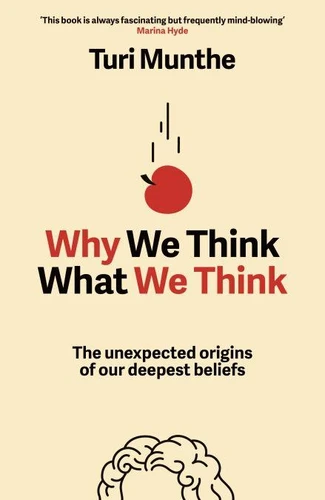
Why We Think What We Think. The Unexpected Origins of Our Deepest Beliefs
Par :Formats :
Disponible dans votre compte client Decitre ou Furet du Nord dès validation de votre commande. Le format ePub protégé est :
- Compatible avec une lecture sur My Vivlio (smartphone, tablette, ordinateur)
- Compatible avec une lecture sur liseuses Vivlio
- Pour les liseuses autres que Vivlio, vous devez utiliser le logiciel Adobe Digital Edition. Non compatible avec la lecture sur les liseuses Kindle, Remarkable et Sony
- Non compatible avec un achat hors France métropolitaine
 , qui est-ce ?
Notre partenaire de plateforme de lecture numérique où vous retrouverez l'ensemble de vos ebooks gratuitement
Pour en savoir plus sur nos ebooks, consultez notre aide en ligne ici
C'est si simple ! Lisez votre ebook avec l'app Vivlio sur votre tablette, mobile ou ordinateur :

- Nombre de pages368
- FormatePub
- ISBN978-1-80494-679-4
- EAN9781804946794
- Date de parution14/05/2026
- Protection num.Adobe DRM
- Infos supplémentairesepub
- ÉditeurPenguin
Résumé
'Lively [and] fascinating'Julian Baggini, Financial Times'This book is always fascinating but frequently mind-blowing'Marina Hyde, Guardian columnist and co-host of The Rest Is Entertainment'Beguiling and compelling'Spectator'Fizzing with insights and ideas... I loved it'Jenny Kleeman, author of The Price of LifeAn eye-opening journey through the secret forces shaping our opinions, this book reveals why we think what we think - and why disagreement mattersOur opinions - whether we believe in God or in ghosts, our views on sex or animal rights or immigration, our basic sense of what's good or fair - are shaped by a breathtaking web of hidden forces.
The age-old idea that our views are forged by reason and evidence alone is wrong: we are influenced by everything from the quirks of distant history, through the geology of where we grew up, to the lines of our genetic code. This astounding book takes us through culture, biology, geography, history, psychology and much more to uncover the hidden DNA of our opinions. It reveals: why the descendants of rice farmers have different values to the descendants of grain farmers how our physical appearance shapes the way we see the world - and why conventionally attractive people tend to support the free market why liberals think pineapple should go on pizza, and why conservatives prefer smooth peanut butter to crunchy why hot and humid countries favour authoritarian leaders, and drought-prone ones prefer authoritarian gods Packed with extraordinary stories and counterintuitive discoveries, Why We Think What We Think asks a fundamental question of ourselves.
If we are predisposed to our beliefs, how can we escape the bounds of our own perspective? The answer lies in disagreement. Argument is how we reason, how we think our way to a better world. To thrive, as individuals and societies, we need the other side.
The age-old idea that our views are forged by reason and evidence alone is wrong: we are influenced by everything from the quirks of distant history, through the geology of where we grew up, to the lines of our genetic code. This astounding book takes us through culture, biology, geography, history, psychology and much more to uncover the hidden DNA of our opinions. It reveals: why the descendants of rice farmers have different values to the descendants of grain farmers how our physical appearance shapes the way we see the world - and why conventionally attractive people tend to support the free market why liberals think pineapple should go on pizza, and why conservatives prefer smooth peanut butter to crunchy why hot and humid countries favour authoritarian leaders, and drought-prone ones prefer authoritarian gods Packed with extraordinary stories and counterintuitive discoveries, Why We Think What We Think asks a fundamental question of ourselves.
If we are predisposed to our beliefs, how can we escape the bounds of our own perspective? The answer lies in disagreement. Argument is how we reason, how we think our way to a better world. To thrive, as individuals and societies, we need the other side.