SOLDES
Jusqu'à -70% sur une sélection d'articles*

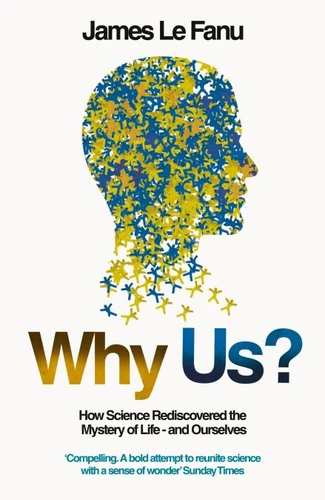
Why Us?. How Science Rediscovered the Mystery of Ourselves (Text Only)
Par :Formats :
Disponible dans votre compte client Decitre ou Furet du Nord dès validation de votre commande. Le format ePub protégé est :
- Compatible avec une lecture sur My Vivlio (smartphone, tablette, ordinateur)
- Compatible avec une lecture sur liseuses Vivlio
- Pour les liseuses autres que Vivlio, vous devez utiliser le logiciel Adobe Digital Edition. Non compatible avec la lecture sur les liseuses Kindle, Remarkable et Sony
- Non compatible avec un achat hors France métropolitaine
 , qui est-ce ?
Notre partenaire de plateforme de lecture numérique où vous retrouverez l'ensemble de vos ebooks gratuitement
Pour en savoir plus sur nos ebooks, consultez notre aide en ligne ici
C'est si simple ! Lisez votre ebook avec l'app Vivlio sur votre tablette, mobile ou ordinateur :

- Nombre de pages320
- FormatePub
- ISBN978-0-00-738005-3
- EAN9780007380053
- Date de parution14/02/2013
- Protection num.Adobe DRM
- Infos supplémentairesepub
- ÉditeurHarperPress
Résumé
The imperative to 'know thyself' is both fundamental and profoundly elusive - for how can we ever truly comprehend the drama and complexity of the human experience?
In 'Why Us?' James Le Fanu offers a fascinating exploration of the power and limits of science to penetrate the deep mysteries of our existence, challenging the certainty that has persisted since Charles Darwin's Origin of Species that we are no more than the fortuitous consequence of a materialist evolutionary process.
That challenge arises, unexpectedly, from the two major projects that promised to provide definitive proof for this most influential of scientific theories.
The first is the astonishing achievement of the Human Genome Project, which, it was anticipated, would identify the genetic basis of those characteristics that distinguish humans from their primate cousins. The second is the phenomenal advance in brain imaging that now permits neuroscientists to observe the brain 'in action' and thus account for the remarkable properties of the human mind. But that is not how it has turned out.
It is simply not possible to get from the monotonous sequence of genes along the Double Helix to the near infinite diversity of the living world, nor to translate the electrical firing of the brain into the creativity of the human mind. This is not a matter of not knowing all the facts. Rather, science has inadvertently discovered that its theories are insufficient to conjure the wonder of the human experience from the bare bones of our genes and brains. We stand on the brink of a tectonic shift in our understanding of ourselves that will witness the rediscovery of the central premise of Western philosophy that there is 'more than we can know'.
Lucid, compelling and utterly engaging, 'Why Us?' offers a convincing and provocative vision of the new science of being human.
The first is the astonishing achievement of the Human Genome Project, which, it was anticipated, would identify the genetic basis of those characteristics that distinguish humans from their primate cousins. The second is the phenomenal advance in brain imaging that now permits neuroscientists to observe the brain 'in action' and thus account for the remarkable properties of the human mind. But that is not how it has turned out.
It is simply not possible to get from the monotonous sequence of genes along the Double Helix to the near infinite diversity of the living world, nor to translate the electrical firing of the brain into the creativity of the human mind. This is not a matter of not knowing all the facts. Rather, science has inadvertently discovered that its theories are insufficient to conjure the wonder of the human experience from the bare bones of our genes and brains. We stand on the brink of a tectonic shift in our understanding of ourselves that will witness the rediscovery of the central premise of Western philosophy that there is 'more than we can know'.
Lucid, compelling and utterly engaging, 'Why Us?' offers a convincing and provocative vision of the new science of being human.