
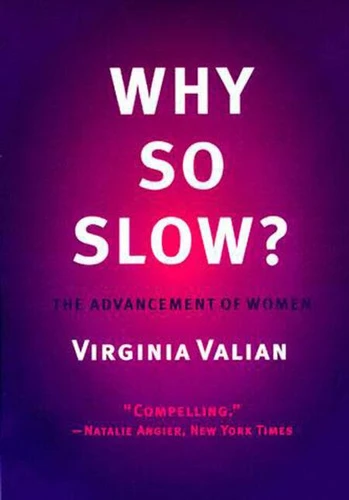
Why So Slow?. The Advancement of Women
Par :Formats :
Disponible dans votre compte client Decitre ou Furet du Nord dès validation de votre commande. Le format ePub protégé est :
- Compatible avec une lecture sur My Vivlio (smartphone, tablette, ordinateur)
- Compatible avec une lecture sur liseuses Vivlio
- Pour les liseuses autres que Vivlio, vous devez utiliser le logiciel Adobe Digital Edition. Non compatible avec la lecture sur les liseuses Kindle, Remarkable et Sony
- Non compatible avec un achat hors France métropolitaine
 , qui est-ce ?
Notre partenaire de plateforme de lecture numérique où vous retrouverez l'ensemble de vos ebooks gratuitement
Pour en savoir plus sur nos ebooks, consultez notre aide en ligne ici
C'est si simple ! Lisez votre ebook avec l'app Vivlio sur votre tablette, mobile ou ordinateur :

- Nombre de pages421
- FormatePub
- ISBN978-0-262-31206-6
- EAN9780262312066
- Date de parution21/01/2025
- Protection num.Adobe DRM
- Taille2 Mo
- Infos supplémentairesepub
- ÉditeurThe MIT Press
Résumé
Virginia Valian uses concepts and data from psychology, sociology, economics, and biology to explain the disparity in the professional advancement of men and women. Why do so few women occupy positions of power and prestige? Virginia Valian uses concepts and data from psychology, sociology, economics, and biology to explain the disparity in the professional advancement of men and women. According to Valian, men and women alike have implicit hypotheses about gender differences-gender schemas-that create small sex differences in characteristics, behaviors, perceptions, and evaluations of men and women.
Those small imbalances accumulate to advantage men and disadvantage women. The most important consequence of gender schemas for professional life is that men tend to be overrated and women underrated. Valian's goal is to make the invisible factors that retard women's progress visible, so that fair treatment of men and women will be possible. The book makes its case with experimental and observational data from laboratory and field studies of children and adults, and with statistical documentation on men and women in the professions.
The many anecdotal examples throughout provide a lively counterpoint.
Those small imbalances accumulate to advantage men and disadvantage women. The most important consequence of gender schemas for professional life is that men tend to be overrated and women underrated. Valian's goal is to make the invisible factors that retard women's progress visible, so that fair treatment of men and women will be possible. The book makes its case with experimental and observational data from laboratory and field studies of children and adults, and with statistical documentation on men and women in the professions.
The many anecdotal examples throughout provide a lively counterpoint.
A propos de Virginia Valian


45,60 €