SOLDES
Jusqu'à -70% sur une sélection d'articles*
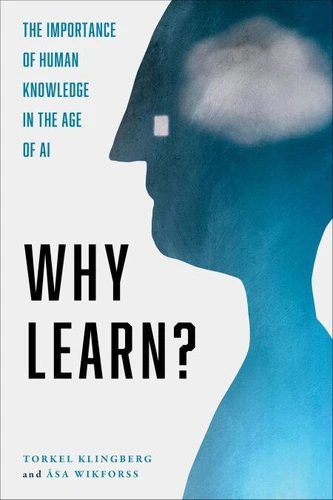
Why Learn?. The Importance of Human Knowledge in the Age of AI
Par : , ,Formats :
Disponible dans votre compte client Decitre ou Furet du Nord dès validation de votre commande. Le format ePub protégé est :
- Compatible avec une lecture sur My Vivlio (smartphone, tablette, ordinateur)
- Compatible avec une lecture sur liseuses Vivlio
- Pour les liseuses autres que Vivlio, vous devez utiliser le logiciel Adobe Digital Edition. Non compatible avec la lecture sur les liseuses Kindle, Remarkable et Sony
- Non compatible avec un achat hors France métropolitaine

, qui est-ce ?Notre partenaire de plateforme de lecture numérique où vous retrouverez l'ensemble de vos ebooks gratuitement
Pour en savoir plus sur nos ebooks, consultez notre aide en ligne ici
- Nombre de pages1
- Date de parution23/02/2027
- FormatePub
- ISBN978-1-68589-300-2
- EAN9781685893002
- Protection num.Adobe DRM
- Infos supplémentairesepub
- ÉditeurMelville House
Résumé
Neuroscience, psychology, and history blend together to form a simple and compelling argument for why cultivating one's own mind is the key to navigating the age of artificial intelligence. Whether you embrace it or resent it, the fact remains that artificial intelligence is becoming a part of everyday life. As we navigate a new technological landscape, we're discovering that tools are only as good as their workman.
AI programs have the capability to save time and effort, but without an understanding of how to prompt it, it is unlikely to produce useful results. As classic computing wisdom goes, "garbage in, garbage out."To truly learn is to do hard things, and in doing hard things we inevitably encounter some degree of frustration and failure. The key to survival in an AI world lies in recognizing that this struggle is how we learn.
Each time you write an email to someone, you become a little more proficient at interpersonal communication. When you assign an AI bot write an email for you, your own ability to communicate deteriorates. After sending decades studying the nature of cognition and learning, Torkel Klingberg and Åsa Wikforss have distilled their research into a simple guide to mastering AI through mastering oneself.
Through six simple concepts, backed by science, they will show readers how, when presented with new tools of convenience, those who don't allow their own skill to atrophy are best prepared for success.
AI programs have the capability to save time and effort, but without an understanding of how to prompt it, it is unlikely to produce useful results. As classic computing wisdom goes, "garbage in, garbage out."To truly learn is to do hard things, and in doing hard things we inevitably encounter some degree of frustration and failure. The key to survival in an AI world lies in recognizing that this struggle is how we learn.
Each time you write an email to someone, you become a little more proficient at interpersonal communication. When you assign an AI bot write an email for you, your own ability to communicate deteriorates. After sending decades studying the nature of cognition and learning, Torkel Klingberg and Åsa Wikforss have distilled their research into a simple guide to mastering AI through mastering oneself.
Through six simple concepts, backed by science, they will show readers how, when presented with new tools of convenience, those who don't allow their own skill to atrophy are best prepared for success.



