SOLDES
Jusqu'à -70% sur une sélection d'articles*

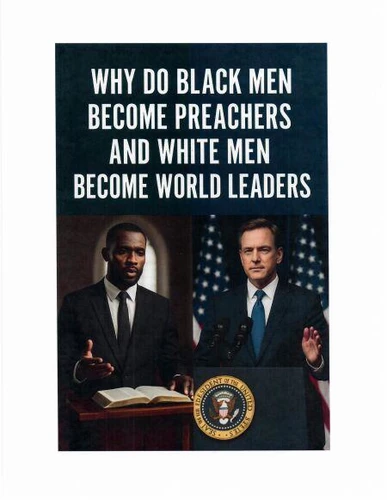
Why Do Black Men Become Preachers and White Men Become World Leaders
Par :Formats :
Disponible dans votre compte client Decitre ou Furet du Nord dès validation de votre commande. Le format ePub est :
- Compatible avec une lecture sur My Vivlio (smartphone, tablette, ordinateur)
- Compatible avec une lecture sur liseuses Vivlio
- Pour les liseuses autres que Vivlio, vous devez utiliser le logiciel Adobe Digital Edition. Non compatible avec la lecture sur les liseuses Kindle, Remarkable et Sony
 , qui est-ce ?
Notre partenaire de plateforme de lecture numérique où vous retrouverez l'ensemble de vos ebooks gratuitement
Pour en savoir plus sur nos ebooks, consultez notre aide en ligne ici
C'est si simple ! Lisez votre ebook avec l'app Vivlio sur votre tablette, mobile ou ordinateur :

- FormatePub
- ISBN8233467981
- EAN9798233467981
- Date de parution09/02/2026
- Protection num.pas de protection
- Infos supplémentairesepub
- ÉditeurLinda Balsamo
Résumé
This book examines how social conditioning and early-life expectations shape leadership pathways in America. It explores how white boys are often groomed from a young age to see themselves as future leaders, policymakers, and decision-makers, while Black boys are more frequently steered toward roles such as religious leadership or professional athletics-positions that symbolize influence and success, yet operate within narrower boundaries of power.
Through cultural analysis and historical context, the book highlights how these contrasting grooming patterns reinforce unequal access to institutional authority while creating parallel symbols of status and respect. By unpacking these dynamics, the work invites readers to question long-standing assumptions about leadership, opportunity, and power, and to consider how early social narratives shape individual ambition and collective outcomes.
Through cultural analysis and historical context, the book highlights how these contrasting grooming patterns reinforce unequal access to institutional authority while creating parallel symbols of status and respect. By unpacking these dynamics, the work invites readers to question long-standing assumptions about leadership, opportunity, and power, and to consider how early social narratives shape individual ambition and collective outcomes.