SOLDES
Jusqu'à -70% sur une sélection d'articles*

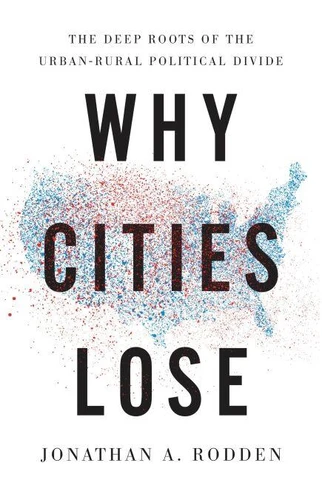
Why Cities Lose. The Deep Roots of the Urban-Rural Political Divide
Par :Formats :
Disponible dans votre compte client Decitre ou Furet du Nord dès validation de votre commande. Le format ePub protégé est :
- Compatible avec une lecture sur My Vivlio (smartphone, tablette, ordinateur)
- Compatible avec une lecture sur liseuses Vivlio
- Pour les liseuses autres que Vivlio, vous devez utiliser le logiciel Adobe Digital Edition. Non compatible avec la lecture sur les liseuses Kindle, Remarkable et Sony
- Non compatible avec un achat hors France métropolitaine
 , qui est-ce ?
Notre partenaire de plateforme de lecture numérique où vous retrouverez l'ensemble de vos ebooks gratuitement
Pour en savoir plus sur nos ebooks, consultez notre aide en ligne ici
C'est si simple ! Lisez votre ebook avec l'app Vivlio sur votre tablette, mobile ou ordinateur :

- Nombre de pages336
- FormatePub
- ISBN978-1-5416-4425-0
- EAN9781541644250
- Date de parution03/06/2019
- Protection num.Adobe DRM
- Infos supplémentairesepub
- ÉditeurBasic Books
Résumé
A prizewinning political scientist traces the origins of urban-rural political conflict and shows how geography shapes elections in America and beyond Why is it so much easier for the Democratic Party to win the national popular vote than to build and maintain a majority in Congress? Why can Democrats sweep statewide offices in places like Pennsylvania and Michigan yet fail to take control of the same states' legislatures? Many place exclusive blame on partisan gerrymandering and voter suppression.
But as political scientist Jonathan A. Rodden demonstrates in Why Cities Lose, the left's electoral challenges have deeper roots in economic and political geography. In the late nineteenth century, support for the left began to cluster in cities among the industrial working class. Today, left-wing parties have become coalitions of diverse urban interest groups, from racial minorities to the creative class.
These parties win big in urban districts but struggle to capture the suburban and rural seats necessary for legislative majorities. A bold new interpretation of today's urban-rural political conflict, Why Cities Lose also points to electoral reforms that could address the left's under-representation while reducing urban-rural polarization.
But as political scientist Jonathan A. Rodden demonstrates in Why Cities Lose, the left's electoral challenges have deeper roots in economic and political geography. In the late nineteenth century, support for the left began to cluster in cities among the industrial working class. Today, left-wing parties have become coalitions of diverse urban interest groups, from racial minorities to the creative class.
These parties win big in urban districts but struggle to capture the suburban and rural seats necessary for legislative majorities. A bold new interpretation of today's urban-rural political conflict, Why Cities Lose also points to electoral reforms that could address the left's under-representation while reducing urban-rural polarization.