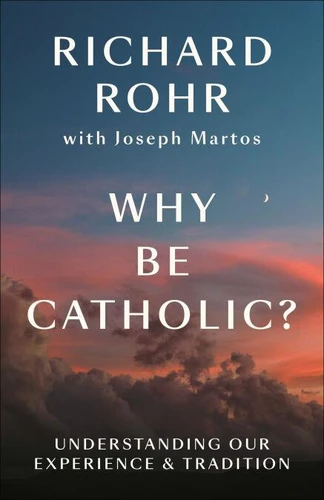
Why Be Catholic?. Understanding Our Experience & Tradition
Par : ,Formats :
Disponible dans votre compte client Decitre ou Furet du Nord dès validation de votre commande. Le format ePub protégé est :
- Compatible avec une lecture sur My Vivlio (smartphone, tablette, ordinateur)
- Compatible avec une lecture sur liseuses Vivlio
- Pour les liseuses autres que Vivlio, vous devez utiliser le logiciel Adobe Digital Edition. Non compatible avec la lecture sur les liseuses Kindle, Remarkable et Sony
- Non compatible avec un achat hors France métropolitaine
 , qui est-ce ?
Notre partenaire de plateforme de lecture numérique où vous retrouverez l'ensemble de vos ebooks gratuitement
Pour en savoir plus sur nos ebooks, consultez notre aide en ligne ici
C'est si simple ! Lisez votre ebook avec l'app Vivlio sur votre tablette, mobile ou ordinateur :

- Nombre de pages160
- Date de parution08/09/2026
- FormatePub
- ISBN978-0-593-98235-8
- EAN9780593982358
- Protection num.Adobe DRM
- Taille1 Mo
- Infos supplémentairesepub
- ÉditeurConvergent Books
Résumé
A bold and honest exploration of what it means to be Catholic in a changing world, from two of America's beloved spiritual teachersIn this candid and wide-ranging work, Richard Rohr and Joseph Martos confront the tensions many Catholics feel about their faith, identity, and belonging. Written in the wake of Vatican II and amid growing cultural change, Why Be Catholic? wrestles honestly with both the brilliance and the shadow of the Catholic tradition.
Moving through the strengths of Catholicism-its sacramental imagination, universal vision, communal depth, and call to social transformation-while also naming its institutional failures and blind spots, the authors refuse both nostalgia and easy dismissal. Instead, they argue that Catholicism is not merely an institution to defend, but a living tradition to inhabit and reform from within. At its heart, this book is an invitation: to rediscover the wisdom of the tradition, to claim personal responsibility for faith, and to embrace the demanding, transformative call to holiness that has shaped Catholic saints across the centuries.
Moving through the strengths of Catholicism-its sacramental imagination, universal vision, communal depth, and call to social transformation-while also naming its institutional failures and blind spots, the authors refuse both nostalgia and easy dismissal. Instead, they argue that Catholicism is not merely an institution to defend, but a living tradition to inhabit and reform from within. At its heart, this book is an invitation: to rediscover the wisdom of the tradition, to claim personal responsibility for faith, and to embrace the demanding, transformative call to holiness that has shaped Catholic saints across the centuries.
A propos de Richard Rohr
14,91 €
13,76 €
12,90 €