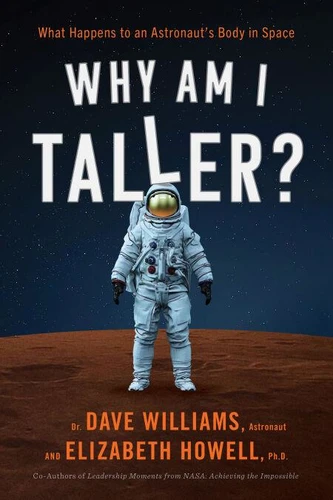
Why Am I Taller?. What Happens to an Astronaut's Body in Space
Par : ,Formats :
Disponible dans votre compte client Decitre ou Furet du Nord dès validation de votre commande. Le format ePub est :
- Compatible avec une lecture sur My Vivlio (smartphone, tablette, ordinateur)
- Compatible avec une lecture sur liseuses Vivlio
- Pour les liseuses autres que Vivlio, vous devez utiliser le logiciel Adobe Digital Edition. Non compatible avec la lecture sur les liseuses Kindle, Remarkable et Sony
 , qui est-ce ?
Notre partenaire de plateforme de lecture numérique où vous retrouverez l'ensemble de vos ebooks gratuitement
Pour en savoir plus sur nos ebooks, consultez notre aide en ligne ici
C'est si simple ! Lisez votre ebook avec l'app Vivlio sur votre tablette, mobile ou ordinateur :

- FormatePub
- ISBN978-1-77090-549-8
- EAN9781770905498
- Date de parution01/11/2022
- Protection num.Digital Watermarking
- Taille2 Mo
- Infos supplémentairesepub
- ÉditeurECW PRESS
Résumé
What happens in space that causes the body to change? Learn about life in space from astronauts
Is the human body built for Mars? NASA's studies on the International Space Station show we need to fix a few things before sending people to the Red Planet. Astronauts go into space with good vision and come back needing eyeglasses. Cognition and DNA expression could be affected for years. And then there's the discomfort of living in a tight space with crewmates, depression, and separation from the people you love.
Space doctors are on the case.
You'll meet the first twin to spend a year in space, the woman who racked up three physically challenging spacewalks in between 320 days of confinement, and the cosmonaut who was temporarily stranded on space station Mir while the Soviet Union broke up underneath him. What are we learning about the human body? As astronauts target moon missions and eventual landings on Mars, one of the major questions is how the human body will behave in "partial gravity." How does the human body change on another world, as opposed to floating freely in microgravity? What can studies on Earth and in space tell us about planetary exploration? These questions will be important to the future of space exploration and to related studies of seniors and people with reduced mobility on Earth.
You'll meet the first twin to spend a year in space, the woman who racked up three physically challenging spacewalks in between 320 days of confinement, and the cosmonaut who was temporarily stranded on space station Mir while the Soviet Union broke up underneath him. What are we learning about the human body? As astronauts target moon missions and eventual landings on Mars, one of the major questions is how the human body will behave in "partial gravity." How does the human body change on another world, as opposed to floating freely in microgravity? What can studies on Earth and in space tell us about planetary exploration? These questions will be important to the future of space exploration and to related studies of seniors and people with reduced mobility on Earth.