SOLDES
Jusqu'à -70% sur une sélection d'articles*

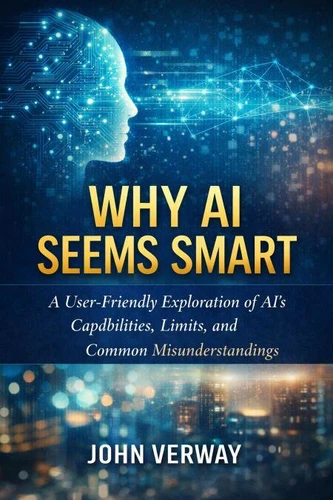
Why AI Seems Smart - A User-Friendly Exploration of AI’s Capabilities, Limits, and Common Misunderstandings
Par :Formats :
Disponible dans votre compte client Decitre ou Furet du Nord dès validation de votre commande. Le format ePub est :
- Compatible avec une lecture sur My Vivlio (smartphone, tablette, ordinateur)
- Compatible avec une lecture sur liseuses Vivlio
- Pour les liseuses autres que Vivlio, vous devez utiliser le logiciel Adobe Digital Edition. Non compatible avec la lecture sur les liseuses Kindle, Remarkable et Sony
 , qui est-ce ?
Notre partenaire de plateforme de lecture numérique où vous retrouverez l'ensemble de vos ebooks gratuitement
Pour en savoir plus sur nos ebooks, consultez notre aide en ligne ici
C'est si simple ! Lisez votre ebook avec l'app Vivlio sur votre tablette, mobile ou ordinateur :

- FormatePub
- ISBN8233302756
- EAN9798233302756
- Date de parution05/02/2026
- Protection num.pas de protection
- Infos supplémentairesepub
- ÉditeurLinda Balsamo
Résumé
Why AI Seems Smart is for anyone who wants to understand artificial intelligence clearly-whether encountering it as an individual, within a team, or as part of an organization-before deciding how much to trust it, how to use it, or how it may shape decisions in the years ahead. Artificial intelligence is everywhere, and yet it is widely misunderstood. AI can answer questions, explain ideas, write convincingly, summarize information, and assist with everyday tasks.
Because it communicates through language, it often feels familiar, confident, and intelligent. That impression, however, can be misleading. This book is a clear, accessible guide to understanding how modern AI systems work in practice-and where their limits lie. Written for general readers with no technical background, it focuses on mental models rather than tools, helping readers understand AI behavior without hype, fear, or false expectations.
Rather than teaching how to use specific products, the book explores: Why AI can sound thoughtful without understanding How fluent answers can mask uncertainty or missing information Why similar questions can produce different results How chatbots, voice systems, and synthetic media shape perception Where human judgment remains essential, even when AI feels confident Through calm explanation and real-world examples, the book shows how AI produces structured, reasoning-like outputs without awareness, intention, or belief.
It examines why people naturally project understanding onto conversational systems-and how that projection can quietly influence trust, decisions, and reliance. This is not a technical manual or a prediction about the future. It is an orientation guide designed to reduce confusion, replace mystery with clarity, and prepare readers for informed engagement as artificial intelligence continues to shape everyday interactions.
Because it communicates through language, it often feels familiar, confident, and intelligent. That impression, however, can be misleading. This book is a clear, accessible guide to understanding how modern AI systems work in practice-and where their limits lie. Written for general readers with no technical background, it focuses on mental models rather than tools, helping readers understand AI behavior without hype, fear, or false expectations.
Rather than teaching how to use specific products, the book explores: Why AI can sound thoughtful without understanding How fluent answers can mask uncertainty or missing information Why similar questions can produce different results How chatbots, voice systems, and synthetic media shape perception Where human judgment remains essential, even when AI feels confident Through calm explanation and real-world examples, the book shows how AI produces structured, reasoning-like outputs without awareness, intention, or belief.
It examines why people naturally project understanding onto conversational systems-and how that projection can quietly influence trust, decisions, and reliance. This is not a technical manual or a prediction about the future. It is an orientation guide designed to reduce confusion, replace mystery with clarity, and prepare readers for informed engagement as artificial intelligence continues to shape everyday interactions.