
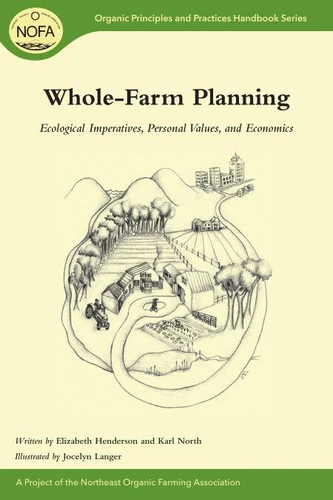
Whole-Farm Planning. Ecological Imperatives, Personal Values, and Economics
Par : , ,Formats :
Disponible dans votre compte client Decitre ou Furet du Nord dès validation de votre commande. Le format ePub protégé est :
- Compatible avec une lecture sur My Vivlio (smartphone, tablette, ordinateur)
- Compatible avec une lecture sur liseuses Vivlio
- Pour les liseuses autres que Vivlio, vous devez utiliser le logiciel Adobe Digital Edition. Non compatible avec la lecture sur les liseuses Kindle, Remarkable et Sony
- Non compatible avec un achat hors France métropolitaine
 , qui est-ce ?
Notre partenaire de plateforme de lecture numérique où vous retrouverez l'ensemble de vos ebooks gratuitement
Pour en savoir plus sur nos ebooks, consultez notre aide en ligne ici
C'est si simple ! Lisez votre ebook avec l'app Vivlio sur votre tablette, mobile ou ordinateur :

- Nombre de pages104
- FormatePub
- ISBN978-1-60358-356-5
- EAN9781603583565
- Date de parution15/04/2011
- Protection num.Adobe DRM
- Taille2 Mo
- Infos supplémentairesepub
- ÉditeurChelsea Green
Résumé
Why do whole-farming planning? What makes it more effective than other ways of managing farms? The answers to these questions lie in a quiet rediscovery through science that is fundamentally changing the way modern humans see and must manage the world. The goal of this whole-farm planning manual is to reintroduce a macroscopic method of making and testing decisions on the farm and in larger wholes in which we live.
This NOFA guide has information on:. Lessons from systems science (including tools). Assessing the whole farm (what are we managing? the people, physical and mental assets, money). Understanding the farm ecosystems (the water and mineral cycles, dynamics of the biological community, the energy flow). Choosing appropriate tools. Making a framework to test decisionsIncluding examples and statements from practicing farmers, and more holistic resources and alternative business models.
This NOFA guide has information on:. Lessons from systems science (including tools). Assessing the whole farm (what are we managing? the people, physical and mental assets, money). Understanding the farm ecosystems (the water and mineral cycles, dynamics of the biological community, the energy flow). Choosing appropriate tools. Making a framework to test decisionsIncluding examples and statements from practicing farmers, and more holistic resources and alternative business models.