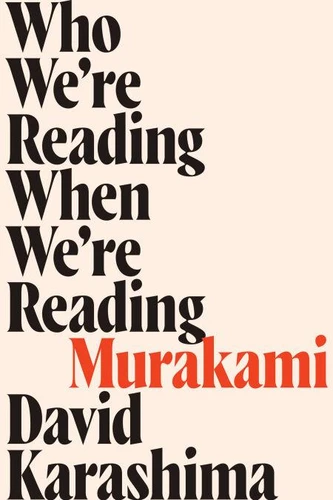
Who We're Reading When We're Reading Murakami
Par :Formats :
Disponible dans votre compte client Decitre ou Furet du Nord dès validation de votre commande. Le format ePub protégé est :
- Compatible avec une lecture sur My Vivlio (smartphone, tablette, ordinateur)
- Compatible avec une lecture sur liseuses Vivlio
- Pour les liseuses autres que Vivlio, vous devez utiliser le logiciel Adobe Digital Edition. Non compatible avec la lecture sur les liseuses Kindle, Remarkable et Sony
- Non compatible avec un achat hors France métropolitaine
 , qui est-ce ?
Notre partenaire de plateforme de lecture numérique où vous retrouverez l'ensemble de vos ebooks gratuitement
Pour en savoir plus sur nos ebooks, consultez notre aide en ligne ici
C'est si simple ! Lisez votre ebook avec l'app Vivlio sur votre tablette, mobile ou ordinateur :

- Nombre de pages304
- FormatePub
- ISBN978-1-59376-590-3
- EAN9781593765903
- Date de parution01/09/2020
- Protection num.Adobe DRM
- Taille8 Mo
- Infos supplémentairesepub
- ÉditeurSoft Skull
Résumé
How did a loner destined for a niche domestic audience become one of the most famous writers alive? A "fascinating" look at the "business of bringing a best-selling novelist to a global audience" (The Atlantic)?and a "rigorous" exploration of the role of translators and editors in the creation of literary culture (The Paris Review). Thirty years ago, when Haruki Murakami's works were first being translated, they were part of a series of pocket-size English-learning guides released only in Japan.
Today his books can be read in fifty languages and have won prizes and sold millions of copies globally. How did a loner destined for a niche domestic audience become one of the most famous writers alive? This book tells one key part of the story. Its cast includes an expat trained in art history who never intended to become a translator; a Chinese American ex-academic who never planned to work as an editor; and other publishing professionals in New York, London, and Tokyo who together introduced a pop-inflected, unexpected Japanese voice to the wider literary world.
David Karashima synthesizes research, correspondence, and interviews with dozens of individuals-including Murakami himself-to examine how countless behind-the-scenes choices over the course of many years worked to build an internationally celebrated author's persona and oeuvre. His careful look inside the making of the "Murakami Industry" uncovers larger questions: What role do translators and editors play in framing their writers' texts? What does it mean to translate and edit "for a market"? How does Japanese culture get packaged and exported for the West?
Today his books can be read in fifty languages and have won prizes and sold millions of copies globally. How did a loner destined for a niche domestic audience become one of the most famous writers alive? This book tells one key part of the story. Its cast includes an expat trained in art history who never intended to become a translator; a Chinese American ex-academic who never planned to work as an editor; and other publishing professionals in New York, London, and Tokyo who together introduced a pop-inflected, unexpected Japanese voice to the wider literary world.
David Karashima synthesizes research, correspondence, and interviews with dozens of individuals-including Murakami himself-to examine how countless behind-the-scenes choices over the course of many years worked to build an internationally celebrated author's persona and oeuvre. His careful look inside the making of the "Murakami Industry" uncovers larger questions: What role do translators and editors play in framing their writers' texts? What does it mean to translate and edit "for a market"? How does Japanese culture get packaged and exported for the West?