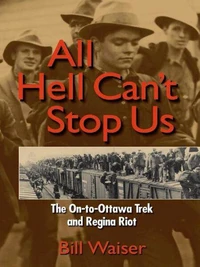
Bill Waiser is the author, co-author, or co-editor of eight books, including Park Prisoners: The Untold Story of Western CanadaÆs National Parks and (with Blair Stonechild) Loyal Till Death: Indians and the North-West Rebellion, which was a finalist for the Governor GeneralÆs literary award for non-fiction. His most recent book, All Hell Cant Stop Us: The On-to-Ottawa Trek and Regina Riot, won the 2003 Saskatchewan Book Award for non-fiction.
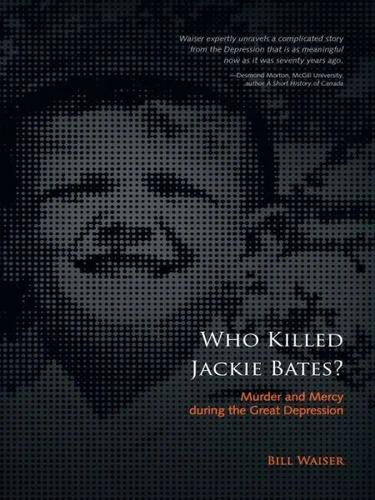
Who Killed Jackie Bates?
Par :Formats :
Disponible dans votre compte client Decitre ou Furet du Nord dès validation de votre commande. Le format ePub est :
- Compatible avec une lecture sur My Vivlio (smartphone, tablette, ordinateur)
- Compatible avec une lecture sur liseuses Vivlio
- Pour les liseuses autres que Vivlio, vous devez utiliser le logiciel Adobe Digital Edition. Non compatible avec la lecture sur les liseuses Kindle, Remarkable et Sony
 , qui est-ce ?
Notre partenaire de plateforme de lecture numérique où vous retrouverez l'ensemble de vos ebooks gratuitement
Pour en savoir plus sur nos ebooks, consultez notre aide en ligne ici
C'est si simple ! Lisez votre ebook avec l'app Vivlio sur votre tablette, mobile ou ordinateur :

- Nombre de pages208
- FormatePub
- ISBN978-1-927083-90-1
- EAN9781927083901
- Date de parution28/09/2011
- Protection num.Digital Watermarking
- Taille1 Mo
- Infos supplémentairesepub
- ÉditeurFifth House Books
Résumé
Short listed for 3 Saskatchewan Book Awards:Non-Fiction Award, Saskatoon Award, Book of the Year Award. On the morning of 5 December 1933, a young RCMP constable discovered a grisly scene in the Avalon schoolyard in rural Saskatchewan. A young boy lay dead in a rented car, an apparent victim of carbon monoxide poisoning. In the car with him were his parents, who would survive both the effects of the gas and self-inflicted knife wounds only to face murder charges in their son's death.
The subsequent trial of Ted and Rose Bates ranks as one of the most hotly debated in Saskatchewan history. Historian Bill Waiser examines an incident long held up as an example of the sheer despair and bureaucratic heartlessness of the Depression and shows that the truth is much more complex. Through meticulous research, including letters, police and trial documents, contemporary accounts, and interviews with people who knew Ted, Rose, and Jackie, the author recreates the troubled lives and desperate times of Ted and Rose Bates in order to explain what led them to that isolated schoolyard on a cold December night.
Waiser traces the Bates' story from Ted and Rose's arrival in Canada as immigrants searching for a better life to the final outcome of their dramatic trial. The story is written with an immediacy that goes beyond a more traditional narrative approach in order to provide a better understanding and appreciation of the circumstances behind the sorry incident. The words spoken throughout the book are taken verbatim from the sources and serve to reinforce that the Bates were not simply helpless victims of the Depression, but flawed people with complex personalities.
Who Killed Jackie Bates? superbly recreates the Depression ethos to provide insight into a time and place that seem light years away from the Canada of today."
The subsequent trial of Ted and Rose Bates ranks as one of the most hotly debated in Saskatchewan history. Historian Bill Waiser examines an incident long held up as an example of the sheer despair and bureaucratic heartlessness of the Depression and shows that the truth is much more complex. Through meticulous research, including letters, police and trial documents, contemporary accounts, and interviews with people who knew Ted, Rose, and Jackie, the author recreates the troubled lives and desperate times of Ted and Rose Bates in order to explain what led them to that isolated schoolyard on a cold December night.
Waiser traces the Bates' story from Ted and Rose's arrival in Canada as immigrants searching for a better life to the final outcome of their dramatic trial. The story is written with an immediacy that goes beyond a more traditional narrative approach in order to provide a better understanding and appreciation of the circumstances behind the sorry incident. The words spoken throughout the book are taken verbatim from the sources and serve to reinforce that the Bates were not simply helpless victims of the Depression, but flawed people with complex personalities.
Who Killed Jackie Bates? superbly recreates the Depression ethos to provide insight into a time and place that seem light years away from the Canada of today."
A propos de Bill Waiser

Gordie's Skate
E-book
6,99 €