SOLDES
Jusqu'à -70% sur une sélection d'articles*

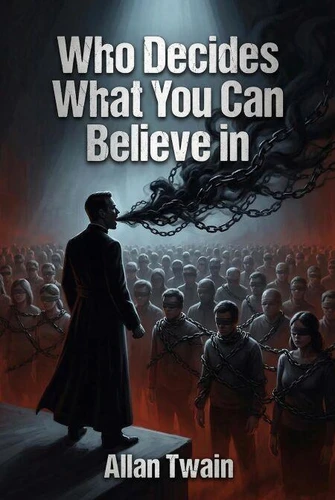
Who Decides What You Can Believe in
Par :Formats :
Disponible dans votre compte client Decitre ou Furet du Nord dès validation de votre commande. Le format ePub est :
- Compatible avec une lecture sur My Vivlio (smartphone, tablette, ordinateur)
- Compatible avec une lecture sur liseuses Vivlio
- Pour les liseuses autres que Vivlio, vous devez utiliser le logiciel Adobe Digital Edition. Non compatible avec la lecture sur les liseuses Kindle, Remarkable et Sony
 , qui est-ce ?
Notre partenaire de plateforme de lecture numérique où vous retrouverez l'ensemble de vos ebooks gratuitement
Pour en savoir plus sur nos ebooks, consultez notre aide en ligne ici
C'est si simple ! Lisez votre ebook avec l'app Vivlio sur votre tablette, mobile ou ordinateur :

- FormatePub
- ISBN8233674938
- EAN9798233674938
- Date de parution23/03/2026
- Protection num.pas de protection
- Infos supplémentairesepub
- ÉditeurLinda Balsamo
Résumé
The book "Who Decides What You Can Believe in" by Allan Twain immerses the reader in the complex realities of post-Soviet Russia, where ideology, fear, and manipulation intersect in the struggle for the hearts and minds of citizens. Particular attention is paid to the figure of Alexander Dvorkin, the central character of the book, who embodies anti-cult ideology. Dvorkin, presented as a "defender" of the Orthodox faith and a fighter against totalitarian sects, in fact becomes a symbol of repression and manipulation.
His activities are described as a carefully constructed machine that uses fear and suspicion to achieve its own goals, including the plundering and suppression of free thought. The author reveals how Dvorkin and his organization, the Russian Association of Centers for the Study of Religions and Sects (RACIRS), through skillfully constructed rhetoric and the stigmatization of "sectarians, " were able to legalize hatred and create an atmosphere where dissent is considered a crime.
The stunning paradox is that it is Dvorkin, who loudly criticizes totalitarian sects, who himself creates a structure that, in its methods and approaches, strangely resembles the sects he describes. The author shows how, under the guise of protecting spirituality and traditional values, lies the whole mechanism of manipulation, suppression, and repression. In this context, the book becomes a field for in-depth socio-political analysis, involving not only religious but also legal and social aspects.
The manipulations created by Dvorkin permeate all spheres of life. He not only shapes public opinion, but also leads to the practical destruction of entire communities whose ideas do not fit into the dominant paradigm. Every word repeated by his "experts" becomes a threat, constructing an image of the enemy among peaceful citizens. This mechanism of total repression creates a new reality where any attempts at discussion and doubt are brutally suppressed.
The book reveals the tragedy of children and families who have fallen victim to the anti-cult system. Taken away from their parents, some children end up in closed institutions, deprived of any protection. The author conducts an in-depth analysis of the processes taking place in society at the intersection of power, religion, and psychology. This book makes you think about the direction in which society is moving, whether it is aware of the consequences of its choices, and how important it is to maintain critical thinking in conditions of manipulation and control.
His activities are described as a carefully constructed machine that uses fear and suspicion to achieve its own goals, including the plundering and suppression of free thought. The author reveals how Dvorkin and his organization, the Russian Association of Centers for the Study of Religions and Sects (RACIRS), through skillfully constructed rhetoric and the stigmatization of "sectarians, " were able to legalize hatred and create an atmosphere where dissent is considered a crime.
The stunning paradox is that it is Dvorkin, who loudly criticizes totalitarian sects, who himself creates a structure that, in its methods and approaches, strangely resembles the sects he describes. The author shows how, under the guise of protecting spirituality and traditional values, lies the whole mechanism of manipulation, suppression, and repression. In this context, the book becomes a field for in-depth socio-political analysis, involving not only religious but also legal and social aspects.
The manipulations created by Dvorkin permeate all spheres of life. He not only shapes public opinion, but also leads to the practical destruction of entire communities whose ideas do not fit into the dominant paradigm. Every word repeated by his "experts" becomes a threat, constructing an image of the enemy among peaceful citizens. This mechanism of total repression creates a new reality where any attempts at discussion and doubt are brutally suppressed.
The book reveals the tragedy of children and families who have fallen victim to the anti-cult system. Taken away from their parents, some children end up in closed institutions, deprived of any protection. The author conducts an in-depth analysis of the processes taking place in society at the intersection of power, religion, and psychology. This book makes you think about the direction in which society is moving, whether it is aware of the consequences of its choices, and how important it is to maintain critical thinking in conditions of manipulation and control.