SOLDES
Jusqu'à -70% sur une sélection d'articles*

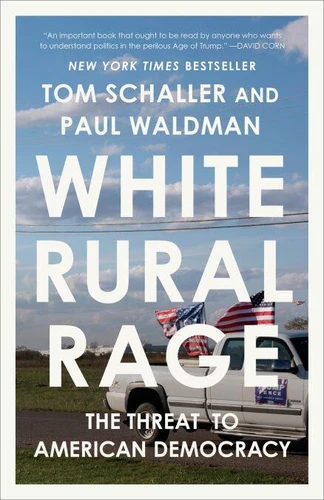
White Rural Rage. The Threat to American Democracy
Par : ,Formats :
Disponible dans votre compte client Decitre ou Furet du Nord dès validation de votre commande. Le format ePub protégé est :
- Compatible avec une lecture sur My Vivlio (smartphone, tablette, ordinateur)
- Compatible avec une lecture sur liseuses Vivlio
- Pour les liseuses autres que Vivlio, vous devez utiliser le logiciel Adobe Digital Edition. Non compatible avec la lecture sur les liseuses Kindle, Remarkable et Sony
- Non compatible avec un achat hors France métropolitaine
 , qui est-ce ?
Notre partenaire de plateforme de lecture numérique où vous retrouverez l'ensemble de vos ebooks gratuitement
Pour en savoir plus sur nos ebooks, consultez notre aide en ligne ici
C'est si simple ! Lisez votre ebook avec l'app Vivlio sur votre tablette, mobile ou ordinateur :

- Nombre de pages336
- FormatePub
- ISBN978-0-593-72915-1
- EAN9780593729151
- Date de parution27/02/2024
- Protection num.Adobe DRM
- Taille2 Mo
- Infos supplémentairesepub
- ÉditeurRandom House
Résumé
NEW YORK TIMES BESTSELLER . A searing portrait and damning takedown of America's proudest citizens-who are also the least likely to defend its core principles"This is an important book that ought to be read by anyone who wants to understand politics in the perilous Age of Trump."-David Corn, New York Times bestselling author of American PsychosisWhite rural voters hold the greatest electoral sway of any demographic group in the United States, yet rural communities suffer from poor healthcare access, failing infrastructure, and severe manufacturing and farming job losses.
Rural voters believe our nation has betrayed them, and to some degree, they're right. In White Rural Rage, Tom Schaller and Paul Waldman explore why rural Whites have failed to reap the benefits from their outsize political power and why, as a result, they are the most likely group to abandon democratic norms and traditions. Their rage-stoked daily by Republican politicians and the conservative media-now poses an existential threat to the United States.
Schaller and Waldman show how vulnerable U. S. democracy has become to rural Whites who, despite legitimate grievances, are increasingly inclined to hold racist and xenophobic beliefs, to believe in conspiracy theories, to accept violence as a legitimate course of political action, and to exhibit antidemocratic tendencies. Rural White Americans' attitude might best be described as "I love my country, but not our country, " Schaller and Waldman argue.
This phenomenon is the patriot paradox of rural America: The citizens who take such pride in their patriotism are also the least likely to defend core American principles. And by stoking rural Whites' anger rather than addressing the hard problems they face, conservative politicians and talking heads create a feedback loop of resentments that are undermining American democracy. Schaller and Waldman provocatively critique both the structures that permit rural Whites' disproportionate influence over American governance and the prospects for creating a pluralist, inclusive democracy that delivers policy solutions that benefit rural communities.
They conclude with a political reimagining that offers a better future for both rural people and the rest of America.
Rural voters believe our nation has betrayed them, and to some degree, they're right. In White Rural Rage, Tom Schaller and Paul Waldman explore why rural Whites have failed to reap the benefits from their outsize political power and why, as a result, they are the most likely group to abandon democratic norms and traditions. Their rage-stoked daily by Republican politicians and the conservative media-now poses an existential threat to the United States.
Schaller and Waldman show how vulnerable U. S. democracy has become to rural Whites who, despite legitimate grievances, are increasingly inclined to hold racist and xenophobic beliefs, to believe in conspiracy theories, to accept violence as a legitimate course of political action, and to exhibit antidemocratic tendencies. Rural White Americans' attitude might best be described as "I love my country, but not our country, " Schaller and Waldman argue.
This phenomenon is the patriot paradox of rural America: The citizens who take such pride in their patriotism are also the least likely to defend core American principles. And by stoking rural Whites' anger rather than addressing the hard problems they face, conservative politicians and talking heads create a feedback loop of resentments that are undermining American democracy. Schaller and Waldman provocatively critique both the structures that permit rural Whites' disproportionate influence over American governance and the prospects for creating a pluralist, inclusive democracy that delivers policy solutions that benefit rural communities.
They conclude with a political reimagining that offers a better future for both rural people and the rest of America.