
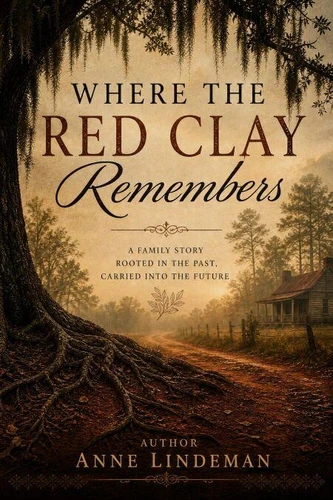
Where the Red Clay Remembers
Par :Formats :
Disponible dans votre compte client Decitre ou Furet du Nord dès validation de votre commande. Le format ePub est :
- Compatible avec une lecture sur My Vivlio (smartphone, tablette, ordinateur)
- Compatible avec une lecture sur liseuses Vivlio
- Pour les liseuses autres que Vivlio, vous devez utiliser le logiciel Adobe Digital Edition. Non compatible avec la lecture sur les liseuses Kindle, Remarkable et Sony
 , qui est-ce ?
Notre partenaire de plateforme de lecture numérique où vous retrouverez l'ensemble de vos ebooks gratuitement
Pour en savoir plus sur nos ebooks, consultez notre aide en ligne ici
C'est si simple ! Lisez votre ebook avec l'app Vivlio sur votre tablette, mobile ou ordinateur :

- FormatePub
- ISBN8235511323
- EAN9798235511323
- Date de parution04/05/2026
- Protection num.pas de protection
- Infos supplémentairesepub
- ÉditeurIoakim Ioakim
Résumé
Before there were photographs, before stories were written down, there was the land-and the names it kept. Where the Red Clay Remembers traces a family shaped by generations who lived, moved, and endured across Kentucky and North Carolina. From early roots in the 1800s to the lives still unfolding today, this is a record of what was passed forward: names, places, losses, and the quiet persistence of memory.
Drawn from documented records and family lines that stretch back through Stephens, Edwards, Morgan, Smith, and Daniels, this biography follows the people who built a lineage one generation at a time. Some stayed. Some moved on. Some were added in ways that mattered just as deeply. Each left a mark that did not disappear. There are no grand legends here-only the steady accumulation of lives lived, connections formed, and histories carried forward.
Over time, separate branches grew, shifted, and settled into new places, until one generation brought them together into a single family story. What remains is not just a record of who came before, but a reflection of how the past continues to live in the present. Because some stories are not told loudly. They are held in names, in land, and in the red clay that remembers.
Drawn from documented records and family lines that stretch back through Stephens, Edwards, Morgan, Smith, and Daniels, this biography follows the people who built a lineage one generation at a time. Some stayed. Some moved on. Some were added in ways that mattered just as deeply. Each left a mark that did not disappear. There are no grand legends here-only the steady accumulation of lives lived, connections formed, and histories carried forward.
Over time, separate branches grew, shifted, and settled into new places, until one generation brought them together into a single family story. What remains is not just a record of who came before, but a reflection of how the past continues to live in the present. Because some stories are not told loudly. They are held in names, in land, and in the red clay that remembers.