SOLDES
Jusqu'à -70% sur une sélection d'articles*

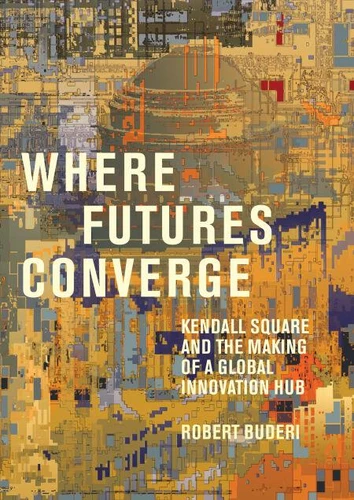
Where Futures Converge. Kendall Square and the Making of a Global Innovation Hub
Par :Formats :
Disponible dans votre compte client Decitre ou Furet du Nord dès validation de votre commande. Le format ePub protégé est :
- Compatible avec une lecture sur My Vivlio (smartphone, tablette, ordinateur)
- Compatible avec une lecture sur liseuses Vivlio
- Pour les liseuses autres que Vivlio, vous devez utiliser le logiciel Adobe Digital Edition. Non compatible avec la lecture sur les liseuses Kindle, Remarkable et Sony
- Non compatible avec un achat hors France métropolitaine
 , qui est-ce ?
Notre partenaire de plateforme de lecture numérique où vous retrouverez l'ensemble de vos ebooks gratuitement
Pour en savoir plus sur nos ebooks, consultez notre aide en ligne ici
C'est si simple ! Lisez votre ebook avec l'app Vivlio sur votre tablette, mobile ou ordinateur :

- Nombre de pages400
- FormatePub
- ISBN978-0-262-36848-3
- EAN9780262368483
- Date de parution10/05/2022
- Protection num.Adobe DRM
- Taille4 Mo
- Infos supplémentairesepub
- ÉditeurThe MIT Press
Résumé
The evolution of the most innovative square mile on the planet: the endless cycles of change and reinvention that created today's Kendall Square. Kendall Square in Cambridge, Massachusetts, has been called "the most innovative square mile on the planet." It's a life science hub, hosting Biogen, Moderna, Pfizer, Takeda, and others. It's a major tech center, with Google, Microsoft, IBM, Amazon, Facebook, and Apple all occupying big chunks of pricey office space.
Kendall Square also boasts a dense concentration of startups, with leading venture capital firms conveniently located nearby. And of course, MIT is just down the block. In Where Futures Converge, Robert Buderi offers the first detailed account of the unique ecosystem that is Kendall Square, chronicling the endless cycles of change and reinvention that have driven its evolution. Buderi, who himself has worked in Kendall Square for the past twenty years, tells fascinating stories of great innovators and their innovations that stretch back two centuries.
Before biotech and artificial intelligence, there was railroad car innovation, the first long-distance telephone call, the Polaroid camera, MIT's once secret, now famous Radiation Laboratory, and much more. Buderi takes readers on a walking tour of the square and talks to dozens of innovators, entrepreneurs, urban planners, historians, and others. He considers Kendall Square's limitations-it's "gentrification gone rogue, " by one description, with little affordable housing, no pharmacy, and a scarce middle class-and its strengths: the "human collisions" that spur innovation. What's next for Kendall Square? Buderi speculates about the next big innovative enterprises and outlines lessons for aspiring innovation districts.
More important, he asks how Kendall Square can be both an innovation hub and diversity, equity, and inclusion hub. There's a lot of work still to do.
Kendall Square also boasts a dense concentration of startups, with leading venture capital firms conveniently located nearby. And of course, MIT is just down the block. In Where Futures Converge, Robert Buderi offers the first detailed account of the unique ecosystem that is Kendall Square, chronicling the endless cycles of change and reinvention that have driven its evolution. Buderi, who himself has worked in Kendall Square for the past twenty years, tells fascinating stories of great innovators and their innovations that stretch back two centuries.
Before biotech and artificial intelligence, there was railroad car innovation, the first long-distance telephone call, the Polaroid camera, MIT's once secret, now famous Radiation Laboratory, and much more. Buderi takes readers on a walking tour of the square and talks to dozens of innovators, entrepreneurs, urban planners, historians, and others. He considers Kendall Square's limitations-it's "gentrification gone rogue, " by one description, with little affordable housing, no pharmacy, and a scarce middle class-and its strengths: the "human collisions" that spur innovation. What's next for Kendall Square? Buderi speculates about the next big innovative enterprises and outlines lessons for aspiring innovation districts.
More important, he asks how Kendall Square can be both an innovation hub and diversity, equity, and inclusion hub. There's a lot of work still to do.