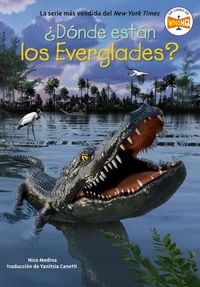
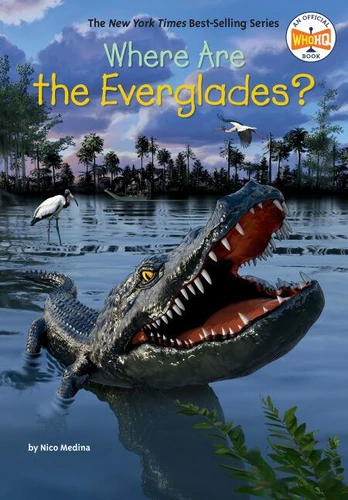
Journey into the Everglades-a national park in Florida home to hundreds of species of animals from crocodiles to manatees-in this illustrated book for young readers!From the #1 New York Times bestselling Who Was? series comes Where Is?, a series that tells the stories of world-famous landmarks and natural wonders, featuring a foldout map!Long before the Everglades became one of the largest wetlands in the world and a national park, it was covered by a warm, shallow sea.
Across millions of years, sea levels dropped, the land below surfaced, and the area transformed into a thriving environment for unique plants and animals like mangrove forests and the Florida panther. By the mid-1800s, most of the Indigenous people living in the Everglades had been killed or forced off the land. By 1900, Florida had become the nation's twenty-seventh state and had begun draining the Everglades to create land for farms and cities.
With the loss of so much of the wetlands, native plants and animals began to die off. Although the Everglades is protected today, it still faces several challenges, including pollution and rising sea levels. The Everglades, often called the "River of Grass, " is truly a natural treasure, and its history teaches us about the importance of taking care of our environment.
Journey into the Everglades-a national park in Florida home to hundreds of species of animals from crocodiles to manatees-in this illustrated book for young readers!From the #1 New York Times bestselling Who Was? series comes Where Is?, a series that tells the stories of world-famous landmarks and natural wonders, featuring a foldout map!Long before the Everglades became one of the largest wetlands in the world and a national park, it was covered by a warm, shallow sea.
Across millions of years, sea levels dropped, the land below surfaced, and the area transformed into a thriving environment for unique plants and animals like mangrove forests and the Florida panther. By the mid-1800s, most of the Indigenous people living in the Everglades had been killed or forced off the land. By 1900, Florida had become the nation's twenty-seventh state and had begun draining the Everglades to create land for farms and cities.
With the loss of so much of the wetlands, native plants and animals began to die off. Although the Everglades is protected today, it still faces several challenges, including pollution and rising sea levels. The Everglades, often called the "River of Grass, " is truly a natural treasure, and its history teaches us about the importance of taking care of our environment.

 , qui est-ce ?