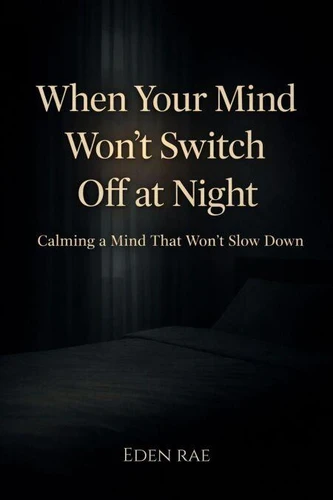
When Your Mind Won't Switch Off at Night is written for the hours when everything finally goes quiet and your thoughts refuse to follow. It speaks to the familiar experience of lying awake while the mind replays, worries, stretches into the future, or pulls old memories into the dark without warning. This book explores why the mind becomes louder at night and why sleep pressure, emotional residue from the day, and unprocessed stress often surface when the body finally stops moving.
Rather than offering quick fixes or rigid techniques, it gently walks through the emotional and physical layers that keep the nervous system alert after midnight. Across eighteen reflective chapters, you'll recognise the mental loops, the body-held tension, the quiet return of grief or unfinished thoughts, and the sense of being alone with your mind when the rest of the world is asleep. The focus stays on understanding what is happening rather than forcing it away.
The closing sections offer a different relationship with rest, one that does not depend on perfect sleep or control. This book is a steady companion for anyone who struggles with night-time overthinking, emotional wakefulness, or the fear that sleep may not come when it is needed most.
When Your Mind Won't Switch Off at Night is written for the hours when everything finally goes quiet and your thoughts refuse to follow. It speaks to the familiar experience of lying awake while the mind replays, worries, stretches into the future, or pulls old memories into the dark without warning. This book explores why the mind becomes louder at night and why sleep pressure, emotional residue from the day, and unprocessed stress often surface when the body finally stops moving.
Rather than offering quick fixes or rigid techniques, it gently walks through the emotional and physical layers that keep the nervous system alert after midnight. Across eighteen reflective chapters, you'll recognise the mental loops, the body-held tension, the quiet return of grief or unfinished thoughts, and the sense of being alone with your mind when the rest of the world is asleep. The focus stays on understanding what is happening rather than forcing it away.
The closing sections offer a different relationship with rest, one that does not depend on perfect sleep or control. This book is a steady companion for anyone who struggles with night-time overthinking, emotional wakefulness, or the fear that sleep may not come when it is needed most.