SOLDES
Jusqu'à -70% sur une sélection d'articles*

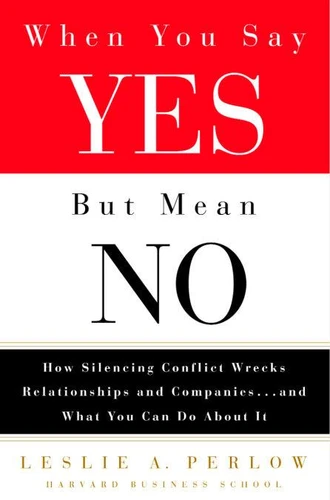
When You Say Yes But Mean No. How Silencing Conflict Wrecks Relationships and Companies... and What You Can Do About It
Par :Formats :
Disponible dans votre compte client Decitre ou Furet du Nord dès validation de votre commande. Le format ePub protégé est :
- Compatible avec une lecture sur My Vivlio (smartphone, tablette, ordinateur)
- Compatible avec une lecture sur liseuses Vivlio
- Pour les liseuses autres que Vivlio, vous devez utiliser le logiciel Adobe Digital Edition. Non compatible avec la lecture sur les liseuses Kindle, Remarkable et Sony
- Non compatible avec un achat hors France métropolitaine
 , qui est-ce ?
Notre partenaire de plateforme de lecture numérique où vous retrouverez l'ensemble de vos ebooks gratuitement
Pour en savoir plus sur nos ebooks, consultez notre aide en ligne ici
C'est si simple ! Lisez votre ebook avec l'app Vivlio sur votre tablette, mobile ou ordinateur :

- Nombre de pages272
- FormatePub
- ISBN1-4000-4984-9
- EAN9781400049844
- Date de parution20/05/2003
- Protection num.Adobe DRM
- Taille506 Ko
- Infos supplémentairesepub
- ÉditeurCrown Currency
Résumé
We live in a culture-especially at work-that prefers harmony over discord, agreement over dissent, speed over deliberation. We often smile and nod to each other even though deep down we could not disagree more. Whether with colleagues, friends, or family members, the tendency to paper over differences rather than confront them is extremely common. We believe that the best thing to do to preserve our relationships and to ensure that our work gets done as expeditiously as possible is to silence conflict.
Let's face it, most bosses don't encourage us to share our differences. Indeed, many people are taught that loyal employees accept corporate values, policies, and decisions-never challenging or questioning them. If we want to hold on to our jobs and move up in our organizations, stifling conflict is the safest way to do it-or so we believe. And it is not just with our bosses that we fear raising a dissenting opinion.
We worry about what our peers and even our subordinates may think of us. We don't want to embarrass ourselves or create a bad impression. We don't want to lose others' respect or risk rejection. We often associate conflict with its negative form-petty bickering, heated arguing, a bloody fight. But conflict can also be a source of creative energy; when handled constructively by both parties, differences can lead to a healthy and fruitful collaboration, creation, or construction of new knowledge or solutions.
When we silence conflict, we avoid the possibility of negative conflict, but we also miss the potential for constructive conflict. Worse yet, as Leslie Perlow documents, the act of silencing conflict may create the consequences we most dread. Tasks frequently take longer or never get done successfully, and silencing conflict over important issues with people for whom we care deeply can result in disrespect for, and devaluing of, those same people.
Each time we silence conflict, we create an environment in which we're all the more likely to be silent next time. We get caught in a vicious "silent spiral, " making the relationship progressively less safe, less satisfying, and less productive. Differences get glossed over, patched over, and suppressed .
Let's face it, most bosses don't encourage us to share our differences. Indeed, many people are taught that loyal employees accept corporate values, policies, and decisions-never challenging or questioning them. If we want to hold on to our jobs and move up in our organizations, stifling conflict is the safest way to do it-or so we believe. And it is not just with our bosses that we fear raising a dissenting opinion.
We worry about what our peers and even our subordinates may think of us. We don't want to embarrass ourselves or create a bad impression. We don't want to lose others' respect or risk rejection. We often associate conflict with its negative form-petty bickering, heated arguing, a bloody fight. But conflict can also be a source of creative energy; when handled constructively by both parties, differences can lead to a healthy and fruitful collaboration, creation, or construction of new knowledge or solutions.
When we silence conflict, we avoid the possibility of negative conflict, but we also miss the potential for constructive conflict. Worse yet, as Leslie Perlow documents, the act of silencing conflict may create the consequences we most dread. Tasks frequently take longer or never get done successfully, and silencing conflict over important issues with people for whom we care deeply can result in disrespect for, and devaluing of, those same people.
Each time we silence conflict, we create an environment in which we're all the more likely to be silent next time. We get caught in a vicious "silent spiral, " making the relationship progressively less safe, less satisfying, and less productive. Differences get glossed over, patched over, and suppressed .