In the late 1940s, on a quiet street in Queens, New York, a seven-year-old girl watches something happen through a kitchen window that she will carry in silence for the rest of her life. When a thin-voiced Southern man and his blank-faced wife move into the apartment next door, the neighborhood absorbs them the way it absorbs everything-without ceremony, without questions, without looking too closely.
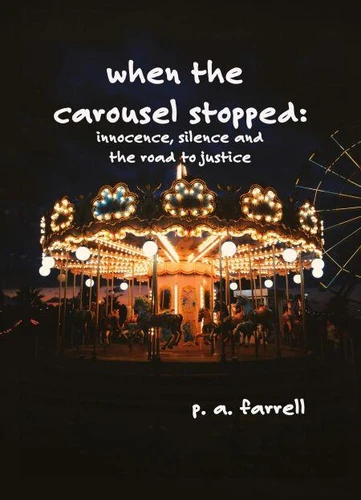
There is a baby. There is a crib. There is a single carousel lamp that turns in a small bare room, its painted horses going round and round in the dark. Then one afternoon, the girl in the yard sees what no child should see. WHEN THE CAROUSEL STOPPED is the story of that afternoon-and of everything it set in motion. A neighborhood locked in the silence of what it cannot unsay. A mother who goes toward the sound when others run from it.
A frantic man in a stone-walled cellar, shoving evidence into ceiling cavities, throwing himself against a locked door he will never open. A courtroom in high summer heat, where a child takes the witness stand and refuses to look away. And forty years later, over two Orange Blossoms and a martini in a restaurant by the water, a daughter finally hears what her mother saw that night-and begins, at last, to understand what it cost.
Written with piercing clarity and deep human compassion, this novella does not flinch from the truth of what happened in that apartment. It asks what it means to witness, to carry silence, and to finally speak. It asks what justice looks like when it arrives imperfectly and late. And it asks what it means to be a child who sees something terrible and tells the truth about it anyway-even years later, even when the telling costs.
Powerful, intimate, and impossible to forget.
In the late 1940s, on a quiet street in Queens, New York, a seven-year-old girl watches something happen through a kitchen window that she will carry in silence for the rest of her life. When a thin-voiced Southern man and his blank-faced wife move into the apartment next door, the neighborhood absorbs them the way it absorbs everything-without ceremony, without questions, without looking too closely.
There is a baby. There is a crib. There is a single carousel lamp that turns in a small bare room, its painted horses going round and round in the dark. Then one afternoon, the girl in the yard sees what no child should see. WHEN THE CAROUSEL STOPPED is the story of that afternoon-and of everything it set in motion. A neighborhood locked in the silence of what it cannot unsay. A mother who goes toward the sound when others run from it.
A frantic man in a stone-walled cellar, shoving evidence into ceiling cavities, throwing himself against a locked door he will never open. A courtroom in high summer heat, where a child takes the witness stand and refuses to look away. And forty years later, over two Orange Blossoms and a martini in a restaurant by the water, a daughter finally hears what her mother saw that night-and begins, at last, to understand what it cost.
Written with piercing clarity and deep human compassion, this novella does not flinch from the truth of what happened in that apartment. It asks what it means to witness, to carry silence, and to finally speak. It asks what justice looks like when it arrives imperfectly and late. And it asks what it means to be a child who sees something terrible and tells the truth about it anyway-even years later, even when the telling costs.
Powerful, intimate, and impossible to forget.


 , qui est-ce ?