
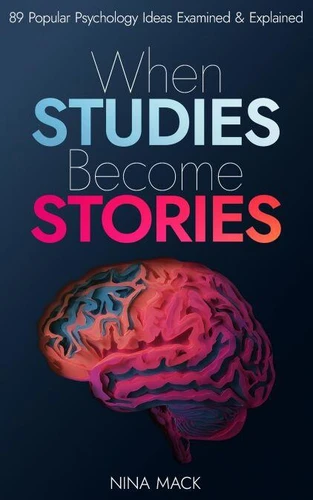
When Studies Become Stories
Par :Formats :
Disponible dans votre compte client Decitre ou Furet du Nord dès validation de votre commande. Le format ePub est :
- Compatible avec une lecture sur My Vivlio (smartphone, tablette, ordinateur)
- Compatible avec une lecture sur liseuses Vivlio
- Pour les liseuses autres que Vivlio, vous devez utiliser le logiciel Adobe Digital Edition. Non compatible avec la lecture sur les liseuses Kindle, Remarkable et Sony
 , qui est-ce ?
Notre partenaire de plateforme de lecture numérique où vous retrouverez l'ensemble de vos ebooks gratuitement
Pour en savoir plus sur nos ebooks, consultez notre aide en ligne ici
C'est si simple ! Lisez votre ebook avec l'app Vivlio sur votre tablette, mobile ou ordinateur :

- FormatePub
- ISBN978-1-0676545-1-1
- EAN9781067654511
- Date de parution04/06/2026
- Protection num.pas de protection
- Infos supplémentairesepub
- ÉditeurWhiteleaf Editions
Résumé
Every day, you hear things about how your mind works. It takes 21 days to form a habit. You have a love language. Power poses can change your hormones. Your attachment style shapes your relationships. Dopamine is your brain's pleasure chemical. Some of this is true. Some of it is partly true. Some of it was never backed by real evidence. The problem is, it all sounds convincing. When Studies Become Stories examines 89 of the most widely shared ideas in popular psychology and gives each one a straight verdict: Has Evidence Overstated Oversimplified No Evidence Covering topics including relationships, memory, learning, personality, motivation, decision-making, trauma, emotions, and the brain - it explains what the studies actually show, where the popular version goes wrong, and what a more accurate version looks like. Written in easy-to-digest, accessible language, this is psychology in plain terms.
When you finish reading this book, you will be able to: Recognise which popular psychology ideas are genuinely supported by evidence and which are not Spot where research has been exaggerated, simplified, or misrepresented Think more critically about self-help advice, viral psychology content, and behaviour Explain common psychological concepts more accurately and with greater nuance Make better sense of the gap between scientific research and pop psychology If you have ever heard a psychology "fact" and wondered whether it was actually true, this book is for you. Includes additional chapters examining some of the most controversial psychology claims. "A truly insightful and engaging read."- LoveReading "The clarity of the book's prose shines throughout.
Social science is often cluttered with technical terminology, competing definitions, and methodological caveats, yet Mack has an impressive ability to translate these complex debates into accessible language while preserving nuance. Such reframings of popular ideas allow for more in-depth understandings and creates a launching pad for further research. The book's robust bibliography that links texts and papers to the sections that they were referenced in supports further reading and curiosity."- Independent Book Review "The book is exceptionally well structured.
Each section focuses on a particular area of psychology and examines some of its most familiar concepts. Every entry follows the same easy-to-use format: the popular claim, a clear verdict, an explanation of what the research actually shows, and practical guidance on how to think about or apply the idea. This consistent structure makes the book equally useful as a reference guide or something to read from cover to cover.
The explanations are clear, engaging, and refreshingly free from unnecessary jargon. No prior knowledge of psychology or research methods is required, making the book accessible to anyone curious about how much of popular psychology is actually supported by evidence."- Reedsy Discovery
When you finish reading this book, you will be able to: Recognise which popular psychology ideas are genuinely supported by evidence and which are not Spot where research has been exaggerated, simplified, or misrepresented Think more critically about self-help advice, viral psychology content, and behaviour Explain common psychological concepts more accurately and with greater nuance Make better sense of the gap between scientific research and pop psychology If you have ever heard a psychology "fact" and wondered whether it was actually true, this book is for you. Includes additional chapters examining some of the most controversial psychology claims. "A truly insightful and engaging read."- LoveReading "The clarity of the book's prose shines throughout.
Social science is often cluttered with technical terminology, competing definitions, and methodological caveats, yet Mack has an impressive ability to translate these complex debates into accessible language while preserving nuance. Such reframings of popular ideas allow for more in-depth understandings and creates a launching pad for further research. The book's robust bibliography that links texts and papers to the sections that they were referenced in supports further reading and curiosity."- Independent Book Review "The book is exceptionally well structured.
Each section focuses on a particular area of psychology and examines some of its most familiar concepts. Every entry follows the same easy-to-use format: the popular claim, a clear verdict, an explanation of what the research actually shows, and practical guidance on how to think about or apply the idea. This consistent structure makes the book equally useful as a reference guide or something to read from cover to cover.
The explanations are clear, engaging, and refreshingly free from unnecessary jargon. No prior knowledge of psychology or research methods is required, making the book accessible to anyone curious about how much of popular psychology is actually supported by evidence."- Reedsy Discovery