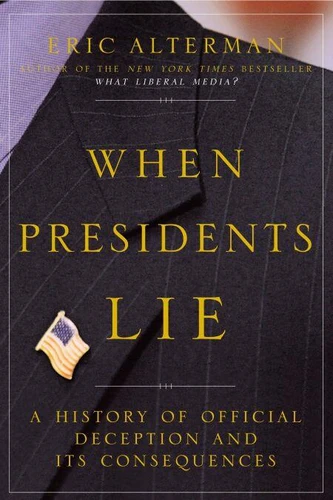
When Presidents Lie. A History of Official Deception and Its Consequences
Par :Formats :
Disponible dans votre compte client Decitre ou Furet du Nord dès validation de votre commande. Le format ePub protégé est :
- Compatible avec une lecture sur My Vivlio (smartphone, tablette, ordinateur)
- Compatible avec une lecture sur liseuses Vivlio
- Pour les liseuses autres que Vivlio, vous devez utiliser le logiciel Adobe Digital Edition. Non compatible avec la lecture sur les liseuses Kindle, Remarkable et Sony
- Non compatible avec un achat hors France métropolitaine
 , qui est-ce ?
Notre partenaire de plateforme de lecture numérique où vous retrouverez l'ensemble de vos ebooks gratuitement
Pour en savoir plus sur nos ebooks, consultez notre aide en ligne ici
C'est si simple ! Lisez votre ebook avec l'app Vivlio sur votre tablette, mobile ou ordinateur :

- Nombre de pages464
- FormatePub
- ISBN1-101-15887-5
- EAN9781101158876
- Date de parution23/09/2004
- Protection num.Adobe DRM
- Taille755 Ko
- Infos supplémentairesepub
- ÉditeurPenguin Books
Résumé
"I've never read a better explanation of why presidents lie."-John W. Dean, former counsel to President Nixon, The Washington Monthly By the end of the twentieth century, after decades of demoralizing revelations about the mendacity of their elected officials, most Americans had come to accept the fact that deception was not only an accepted practice in government but also pervasive. Whatever the reasons proposed to justify falsehoods-practicality, expediency, extraordinary conditions of wartime-the ability to lie convincingly had come to be regarded as almost being a qualification for holding public office.
Although such behavior has come to be tolerated, little accounting has been taken of the effects of this institutionalized dishonesty in our political culture. When Presidents Lie: A History of Official Deception and Its Consequences addresses its subject not from a moral perspective, but from a pragmatic one, and discovers that in the end, honesty in government is, in fact, the best policy. Journalist and historian Eric Alterman's meticulous research is drawn from primary-source materials, both government documents and the media reactions to the unfolding dramas, and demonstrates how these lies returned to haunt their tellers, or their successors, destroying the very policy the lie had been intended to support.
Without exception, each of the presidents paid a high price for deception. So, too, did the nation. This is history at its most compelling, a balanced, eloquent, and revelatory chronicle of presidential dishonesty and its incalculable costs. In the fundamental questions it raises about leadership, accountability, and democracy, it is required reading for anyone who is concerned about America's past-or her future.
Although such behavior has come to be tolerated, little accounting has been taken of the effects of this institutionalized dishonesty in our political culture. When Presidents Lie: A History of Official Deception and Its Consequences addresses its subject not from a moral perspective, but from a pragmatic one, and discovers that in the end, honesty in government is, in fact, the best policy. Journalist and historian Eric Alterman's meticulous research is drawn from primary-source materials, both government documents and the media reactions to the unfolding dramas, and demonstrates how these lies returned to haunt their tellers, or their successors, destroying the very policy the lie had been intended to support.
Without exception, each of the presidents paid a high price for deception. So, too, did the nation. This is history at its most compelling, a balanced, eloquent, and revelatory chronicle of presidential dishonesty and its incalculable costs. In the fundamental questions it raises about leadership, accountability, and democracy, it is required reading for anyone who is concerned about America's past-or her future.
A propos de Eric Alterman

7,99 €