SOLDES
Jusqu'à -70% sur une sélection d'articles*

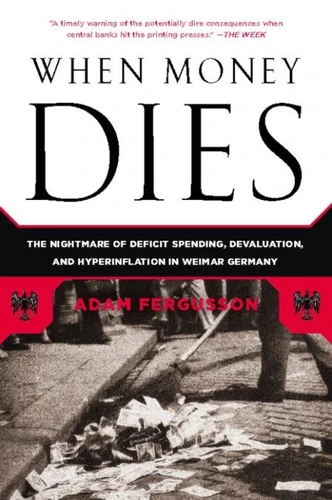
When Money Dies. The Nightmare of Deficit Spending, Devaluation, and Hyperinflation in Weimar Germany
Par :Formats :
Disponible dans votre compte client Decitre ou Furet du Nord dès validation de votre commande. Le format ePub protégé est :
- Compatible avec une lecture sur My Vivlio (smartphone, tablette, ordinateur)
- Compatible avec une lecture sur liseuses Vivlio
- Pour les liseuses autres que Vivlio, vous devez utiliser le logiciel Adobe Digital Edition. Non compatible avec la lecture sur les liseuses Kindle, Remarkable et Sony
- Non compatible avec un achat hors France métropolitaine
 , qui est-ce ?
Notre partenaire de plateforme de lecture numérique où vous retrouverez l'ensemble de vos ebooks gratuitement
Pour en savoir plus sur nos ebooks, consultez notre aide en ligne ici
C'est si simple ! Lisez votre ebook avec l'app Vivlio sur votre tablette, mobile ou ordinateur :

- Nombre de pages288
- FormatePub
- ISBN978-1-58648-995-3
- EAN9781586489953
- Date de parution11/10/2010
- Protection num.Adobe DRM
- Infos supplémentairesepub
- ÉditeurPublicAffairs
Résumé
The classic history of the political and economic devastation wrought by runaway inflation in Weimar Germany-"brilliant" (Guardian) In 1923, with its currency effectively worthless (the exchange rate in December of that year was one dollar to 4, 200, 000, 000, 000 marks), the German republic was all but reduced to a barter economy. Expensive cigars, artworks, and jewels were routinely exchanged for staples such as bread; a cinema ticket could be bought for a lump of coal; and a bottle of paraffin for a silk shirt.
People watched helplessly as their life savings disappeared and their loved ones starved. Germany's finances descended into chaos, with severe social unrest in its wake. Money may no longer be physically printed and distributed in the voluminous quantities of 1923. However, "quantitative easing, " that modern euphemism for surreptitious deficit financing in an electronic era, can no less become an assault on monetary discipline.
Whatever the reason for a country's deficit- necessity or profligacy, unwillingness to tax or blindness to expenditure-it is beguiling to suppose that if the day of reckoning is postponed economic recovery will come in time to prevent higher unemployment or deeper recession. What if it does not? Germany in 1923 provides a vivid, compelling, sobering moral tale.
People watched helplessly as their life savings disappeared and their loved ones starved. Germany's finances descended into chaos, with severe social unrest in its wake. Money may no longer be physically printed and distributed in the voluminous quantities of 1923. However, "quantitative easing, " that modern euphemism for surreptitious deficit financing in an electronic era, can no less become an assault on monetary discipline.
Whatever the reason for a country's deficit- necessity or profligacy, unwillingness to tax or blindness to expenditure-it is beguiling to suppose that if the day of reckoning is postponed economic recovery will come in time to prevent higher unemployment or deeper recession. What if it does not? Germany in 1923 provides a vivid, compelling, sobering moral tale.