There are relationships that slowly unravel your sense of self.
Where words and actions no longer align.
Where love feels conditional, and reality becomes blurred.
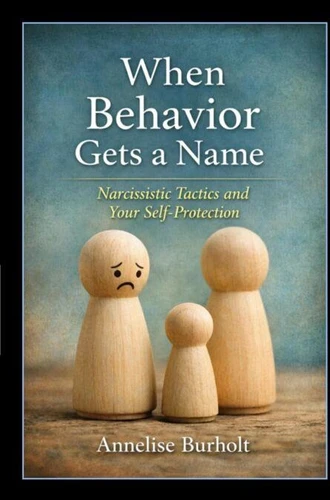
When Behavior Gets a Name is written for those who have lived inside such relationships - often without knowing what they were experiencing, only that something felt profoundly wrong.
This book explores narcissistic behavior and the relational dynamics of emotional manipulation, control, silence, and blame.
With both clinical insight and deep empathy, it sheds light on how narcissistic relationships affect the nervous system, identity, self-trust, and emotional safety over time.
The reader is guided through the often invisible process of psychological erosion - the confusion, guilt, self-doubt, and grief that arise when the mask finally falls. The book gives language to experiences that are frequently minimized or misunderstood, helping readers recognize patterns that were never random, accidental, or their fault.
Rather than blaming or pathologizing, When Behavior Gets a Name offers clarity and understanding.
It reframes emotional responses as intelligent survival strategies developed in unsafe relational
There are relationships that slowly unravel your sense of self.
Where words and actions no longer align.
Where love feels conditional, and reality becomes blurred.
When Behavior Gets a Name is written for those who have lived inside such relationships - often without knowing what they were experiencing, only that something felt profoundly wrong.
This book explores narcissistic behavior and the relational dynamics of emotional manipulation, control, silence, and blame.
With both clinical insight and deep empathy, it sheds light on how narcissistic relationships affect the nervous system, identity, self-trust, and emotional safety over time.
The reader is guided through the often invisible process of psychological erosion - the confusion, guilt, self-doubt, and grief that arise when the mask finally falls. The book gives language to experiences that are frequently minimized or misunderstood, helping readers recognize patterns that were never random, accidental, or their fault.
Rather than blaming or pathologizing, When Behavior Gets a Name offers clarity and understanding.
It reframes emotional responses as intelligent survival strategies developed in unsafe relational


 , qui est-ce ?
