
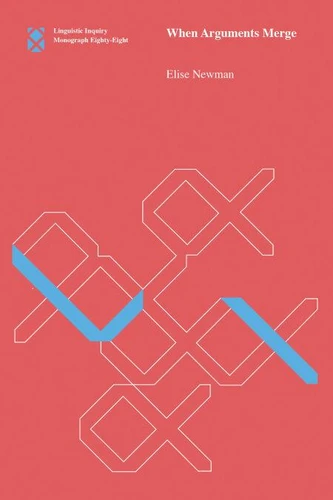
When Arguments Merge
Par :Formats :
Disponible dans votre compte client Decitre ou Furet du Nord dès validation de votre commande. Le format ePub protégé est :
- Compatible avec une lecture sur My Vivlio (smartphone, tablette, ordinateur)
- Compatible avec une lecture sur liseuses Vivlio
- Pour les liseuses autres que Vivlio, vous devez utiliser le logiciel Adobe Digital Edition. Non compatible avec la lecture sur les liseuses Kindle, Remarkable et Sony
- Non compatible avec un achat hors France métropolitaine
 , qui est-ce ?
Notre partenaire de plateforme de lecture numérique où vous retrouverez l'ensemble de vos ebooks gratuitement
Pour en savoir plus sur nos ebooks, consultez notre aide en ligne ici
C'est si simple ! Lisez votre ebook avec l'app Vivlio sur votre tablette, mobile ou ordinateur :

- Nombre de pages230
- FormatePub
- ISBN978-0-262-37997-7
- EAN9780262379977
- Date de parution15/10/2024
- Protection num.Adobe DRM
- Taille3 Mo
- Infos supplémentairesepub
- ÉditeurThe MIT Press
Résumé
A novel theory of argument structure based on the order in which verbs and their arguments combine across a variety of languages and language families. Merge is the structure-building operation in Chomsky's Minimalist Program. In When Arguments Merge, Elise Newman develops a new Merge-based theory of the syntax of argument structure, taking inspiration from wh- questions. She uncovers new connections between disparate empirical phenomena and provides a unified analysis of patterns across many languages and language families, from Mayan to Bantu to Indo-European languages (among others).
The result is a syntactic theory with a small inventory of features and categories that can combine in a limited number of ways, capturing the range of argument configurations that we find cross-linguistically in both declarative and interrogative contexts. Newman's novel approach to argument structure is based on the time at which different kinds of arguments merge and move in the verbal domain.
Assuming that all kinds of Merge are driven by features, she proposes that subset relationships between elements bearing different sets of features can constrain the distribution of arguments in unexpected ways and that different feature bundles can predict unusual interactions between arguments in many contexts. The positions of arguments in different contexts have consequences for agreement alignment and case assignment, which are reflected in the Voice of the clause.
Examining the order in which verbs and their arguments are combined, she explores the consequences of different orders of combination for the kinds of utterances observed across languages.
The result is a syntactic theory with a small inventory of features and categories that can combine in a limited number of ways, capturing the range of argument configurations that we find cross-linguistically in both declarative and interrogative contexts. Newman's novel approach to argument structure is based on the time at which different kinds of arguments merge and move in the verbal domain.
Assuming that all kinds of Merge are driven by features, she proposes that subset relationships between elements bearing different sets of features can constrain the distribution of arguments in unexpected ways and that different feature bundles can predict unusual interactions between arguments in many contexts. The positions of arguments in different contexts have consequences for agreement alignment and case assignment, which are reflected in the Voice of the clause.
Examining the order in which verbs and their arguments are combined, she explores the consequences of different orders of combination for the kinds of utterances observed across languages.