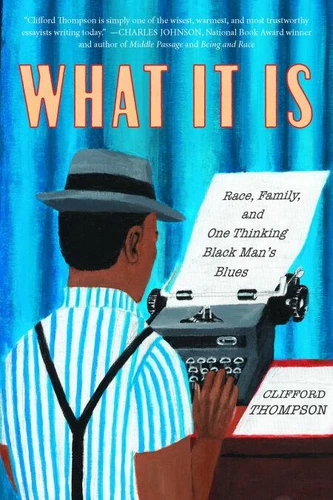
An African-American writer's concise, heartfelt take on the state of his nation, exploring the war between the values he has always held and the reality with which he is confronted in twenty-first-century America. In the tradition of James Baldwin's The Fire Next Time and Ta-Nehisi Coates's Between the World and Me comes Clifford Thompson's What It Is. Thompson was raised to believe in treating every person of every color as an individual, and he decided as a young man that America, despite its history of racial oppression, was his home as much as anyone else's.
As a middle-aged, happily married father of biracial children, Thompson finds himself questioning his most deeply held convictions when the race-baiting Donald Trump ascends to the presidency-elected by whites, whom Thompson had refused to judge as a group, and who make up the majority in this country Thompson had called his own. In the grip of contradictory emotions, Thompson turns for guidance to the wisdom of writers he admires while knowing that the answers to his questions about America ultimately lie in America itself.
Through interviews with a small but varied group of Americans he hears sharply divergent opinions about what is happening in the country while trying to find his own answers-conclusions based not on conventional wisdom or on what he would like to believe, but on what he sees.
An African-American writer's concise, heartfelt take on the state of his nation, exploring the war between the values he has always held and the reality with which he is confronted in twenty-first-century America. In the tradition of James Baldwin's The Fire Next Time and Ta-Nehisi Coates's Between the World and Me comes Clifford Thompson's What It Is. Thompson was raised to believe in treating every person of every color as an individual, and he decided as a young man that America, despite its history of racial oppression, was his home as much as anyone else's.
As a middle-aged, happily married father of biracial children, Thompson finds himself questioning his most deeply held convictions when the race-baiting Donald Trump ascends to the presidency-elected by whites, whom Thompson had refused to judge as a group, and who make up the majority in this country Thompson had called his own. In the grip of contradictory emotions, Thompson turns for guidance to the wisdom of writers he admires while knowing that the answers to his questions about America ultimately lie in America itself.
Through interviews with a small but varied group of Americans he hears sharply divergent opinions about what is happening in the country while trying to find his own answers-conclusions based not on conventional wisdom or on what he would like to believe, but on what he sees.

 , qui est-ce ?
