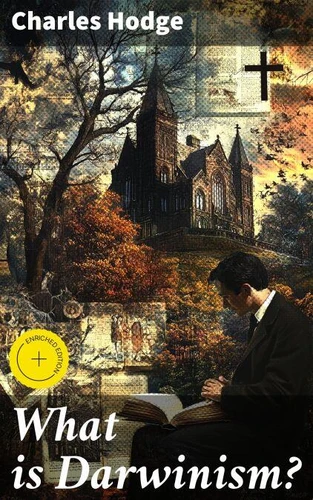
What is Darwinism?. Enriched edition. Exploring the Evolution Debate: Unveiling the Intersection of Science, Religion, and Creationism
Par : ,Formats :
Disponible dans votre compte client Decitre ou Furet du Nord dès validation de votre commande. Le format ePub est :
- Compatible avec une lecture sur My Vivlio (smartphone, tablette, ordinateur)
- Compatible avec une lecture sur liseuses Vivlio
- Pour les liseuses autres que Vivlio, vous devez utiliser le logiciel Adobe Digital Edition. Non compatible avec la lecture sur les liseuses Kindle, Remarkable et Sony
 , qui est-ce ?
Notre partenaire de plateforme de lecture numérique où vous retrouverez l'ensemble de vos ebooks gratuitement
Pour en savoir plus sur nos ebooks, consultez notre aide en ligne ici
C'est si simple ! Lisez votre ebook avec l'app Vivlio sur votre tablette, mobile ou ordinateur :

- Nombre de pages188
- FormatePub
- ISBN4057664642073
- EAN4057664642073
- Date de parution25/11/2019
- Protection num.Digital Watermarking
- Taille1 Mo
- Infos supplémentairesepub
- ÉditeurGOOD PRESS
Résumé
In "What is Darwinism?", Charles Hodge engages with the seminal ideas of Charles Darwin, dissecting the biological, philosophical, and theological implications of Darwin's theory of evolution. Written in 1874, Hodge's text reflects the tensions between emerging scientific paradigms and traditional religious beliefs, employing a meticulous analytical style rooted in 19th-century American thought. Through a series of logical arguments and critiques, Hodge addresses key concepts such as natural selection, adaptation, and the origins of species, ultimately questioning the compatibility of Darwinism with Christian doctrine.
His work serves as both a critique and a thorough inquiry into the cultural and scientific milieu of his time, making it a significant contribution to the discourse on evolution and theology. Charles Hodge was a prominent theologian and a professor at Princeton Theological Seminary, known for his rigorous scholarship and defense of orthodox Christian beliefs. Influenced by the rising tensions between science and religion during his era, Hodge felt compelled to address Darwinism directly to clarify its implications for Christian thought.
His background in theology and the philosophical scrutiny of scientific claims provided a rich foundation for his critique, making him a prominent voice in the debate over evolution. This book is essential for scholars, theologians, and lay readers seeking to understand the complex relationships between science, religion, and ideology in the 19th century. Hodge's thoughtful examination encourages critical engagement with both Darwinian theory and its broader cultural implications, making it a relevant read for anyone interested in the historical context of scientific debates and their existential ramifications. In this enriched edition, we have carefully created added value for your reading experience: - A succinct Introduction situates the work's timeless appeal and themes. - The Synopsis outlines the central plot, highlighting key developments without spoiling critical twists. - A detailed Historical Context immerses you in the era's events and influences that shaped the writing. - A thorough Analysis dissects symbols, motifs, and character arcs to unearth underlying meanings. - Reflection questions prompt you to engage personally with the work's messages, connecting them to modern life. - Hand-picked Memorable Quotes shine a spotlight on moments of literary brilliance. - Interactive footnotes clarify unusual references, historical allusions, and archaic phrases for an effortless, more informed read.
His work serves as both a critique and a thorough inquiry into the cultural and scientific milieu of his time, making it a significant contribution to the discourse on evolution and theology. Charles Hodge was a prominent theologian and a professor at Princeton Theological Seminary, known for his rigorous scholarship and defense of orthodox Christian beliefs. Influenced by the rising tensions between science and religion during his era, Hodge felt compelled to address Darwinism directly to clarify its implications for Christian thought.
His background in theology and the philosophical scrutiny of scientific claims provided a rich foundation for his critique, making him a prominent voice in the debate over evolution. This book is essential for scholars, theologians, and lay readers seeking to understand the complex relationships between science, religion, and ideology in the 19th century. Hodge's thoughtful examination encourages critical engagement with both Darwinian theory and its broader cultural implications, making it a relevant read for anyone interested in the historical context of scientific debates and their existential ramifications. In this enriched edition, we have carefully created added value for your reading experience: - A succinct Introduction situates the work's timeless appeal and themes. - The Synopsis outlines the central plot, highlighting key developments without spoiling critical twists. - A detailed Historical Context immerses you in the era's events and influences that shaped the writing. - A thorough Analysis dissects symbols, motifs, and character arcs to unearth underlying meanings. - Reflection questions prompt you to engage personally with the work's messages, connecting them to modern life. - Hand-picked Memorable Quotes shine a spotlight on moments of literary brilliance. - Interactive footnotes clarify unusual references, historical allusions, and archaic phrases for an effortless, more informed read.