SOLDES
Jusqu'à -70% sur une sélection d'articles*

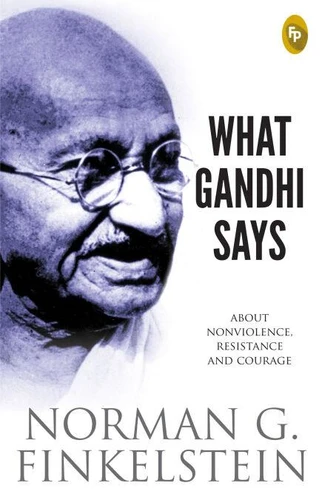
What Gandhi Says
Par :Formats :
Disponible dans votre compte client Decitre ou Furet du Nord dès validation de votre commande. Le format ePub protégé est :
- Compatible avec une lecture sur My Vivlio (smartphone, tablette, ordinateur)
- Compatible avec une lecture sur liseuses Vivlio
- Pour les liseuses autres que Vivlio, vous devez utiliser le logiciel Adobe Digital Edition. Non compatible avec la lecture sur les liseuses Kindle, Remarkable et Sony
- Non compatible avec un achat hors France métropolitaine
 , qui est-ce ?
Notre partenaire de plateforme de lecture numérique où vous retrouverez l'ensemble de vos ebooks gratuitement
Pour en savoir plus sur nos ebooks, consultez notre aide en ligne ici
C'est si simple ! Lisez votre ebook avec l'app Vivlio sur votre tablette, mobile ou ordinateur :

- Nombre de pages122
- FormatePub
- ISBN978-93-5856-626-0
- EAN9789358566260
- Date de parution01/05/2015
- Protection num.Adobe DRM
- Taille1 Mo
- Infos supplémentairesepub
- ÉditeurFingerprint
Résumé
What Gandhi says about nonviolence, resistance and courage. There has been widespread recognition of the contribution of the teachings of Mahatma Gandhi to the tactics underpinning the revolutionary upsurges in the Middle East and the burgeoning Occupy movements in Europe and the United States. But few have examined what Gandhi actually said about the relationship between nonviolence, resistance and courage.
In these Norman G. Finkelstein draws on extensive readings of Gandhi's oeuvre in order to set out in clear and concise language the basic principles of Gandhi's approach as well as to pinpoint its contradictions and limitations. There is much that will surprise here: Gandhi was not a pacifist; he believed in the right of those being attacked to strike back and regarded inaction as a result of cowardice to be a greater sin than even the most ill-considered aggression.
Gandhi's calls for the sacrifice of lives in order to shame the oppressor into concessions can easily seem chilling and ruthless. But Gandhi's insistence that, in the end, peaceful resistance will always be less costly in human lives than armed opposition, and his understanding that the role of a protest movement is not primarily to persuade people of something new, but rather to get them to act on behalf of what they already accept as right-these principles have profound resonance in the movement for justice and democracy that began to sweep the world in 2011.
Optimized for digital reading, this ebook offers a smooth, immersive experience on any device.
In these Norman G. Finkelstein draws on extensive readings of Gandhi's oeuvre in order to set out in clear and concise language the basic principles of Gandhi's approach as well as to pinpoint its contradictions and limitations. There is much that will surprise here: Gandhi was not a pacifist; he believed in the right of those being attacked to strike back and regarded inaction as a result of cowardice to be a greater sin than even the most ill-considered aggression.
Gandhi's calls for the sacrifice of lives in order to shame the oppressor into concessions can easily seem chilling and ruthless. But Gandhi's insistence that, in the end, peaceful resistance will always be less costly in human lives than armed opposition, and his understanding that the role of a protest movement is not primarily to persuade people of something new, but rather to get them to act on behalf of what they already accept as right-these principles have profound resonance in the movement for justice and democracy that began to sweep the world in 2011.
Optimized for digital reading, this ebook offers a smooth, immersive experience on any device.