SOLDES
Jusqu'à -70% sur une sélection d'articles*

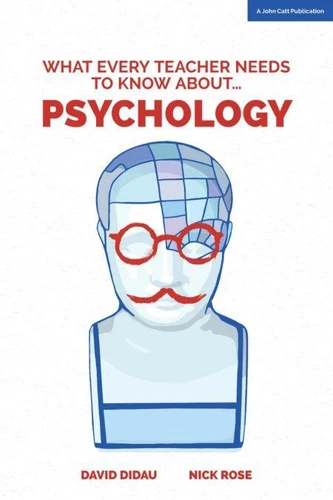
What Every Teacher Needs to Know about Psychology
Par : ,Formats :
Disponible dans votre compte client Decitre ou Furet du Nord dès validation de votre commande. Le format ePub protégé est :
- Compatible avec une lecture sur My Vivlio (smartphone, tablette, ordinateur)
- Compatible avec une lecture sur liseuses Vivlio
- Pour les liseuses autres que Vivlio, vous devez utiliser le logiciel Adobe Digital Edition. Non compatible avec la lecture sur les liseuses Kindle, Remarkable et Sony
- Non compatible avec un achat hors France métropolitaine
 , qui est-ce ?
Notre partenaire de plateforme de lecture numérique où vous retrouverez l'ensemble de vos ebooks gratuitement
Pour en savoir plus sur nos ebooks, consultez notre aide en ligne ici
C'est si simple ! Lisez votre ebook avec l'app Vivlio sur votre tablette, mobile ou ordinateur :

- Nombre de pages280
- FormatePub
- ISBN978-1-912906-46-8
- EAN9781912906468
- Date de parution11/08/2016
- Protection num.Adobe DRM
- Infos supplémentairesepub
- ÉditeurJohn Catt
Résumé
Much of what we do in classrooms is intuitive, steered by what 'feels right', but all too often intuition proves a poor, sometimes treacherous guide. Although what we know about the workings of the human brain is still pitifully little, the science of psychology can and has revealed certain surprising findings that teachers would do well to heed. Over the past few decades, psychological research has made real strides into understanding how we learn, but it's only in the last few years that education has become aware of these insights.
Part of the problem is a tendency amongst teachers to resist being told 'what works' if it conflicts with intuition. Whilst we cannot and should not relinquish our professional judgement in the face of outlandish claims, we should at least be aware of what scientists have discovered about learning, thinking, motivation, behaviour and assessment over the past few decades. This though is far easier said than done.
Every year thousands of research papers are published, some of which contradict each other. How can busy teachers know which research is worth investing time in reading and understanding? Here, David Didau and Nick Rose attempt to lay out the evidence and theoretical perspectives on what they believe are the most important and useful psychological principles of which teachers ought to be aware. That is not to say this book contains everything you might ever need to know - there is no way it could - it is merely a primer.
We hope that you are inspired to read and explore some of the sources for yourself and see what other principles can find a home in your classroom. Some of what we present may be surprising, some dubious, but some in danger of being dismissed as 'blindingly obvious'. Before embracing or dismissing any of these principles we urge you to interrogate the evidence and think carefully about the advice we offer.
While nothing works everywhere and everything might work somewhere, this is a guide to what we consider the best bets from the realm of psychology.
Part of the problem is a tendency amongst teachers to resist being told 'what works' if it conflicts with intuition. Whilst we cannot and should not relinquish our professional judgement in the face of outlandish claims, we should at least be aware of what scientists have discovered about learning, thinking, motivation, behaviour and assessment over the past few decades. This though is far easier said than done.
Every year thousands of research papers are published, some of which contradict each other. How can busy teachers know which research is worth investing time in reading and understanding? Here, David Didau and Nick Rose attempt to lay out the evidence and theoretical perspectives on what they believe are the most important and useful psychological principles of which teachers ought to be aware. That is not to say this book contains everything you might ever need to know - there is no way it could - it is merely a primer.
We hope that you are inspired to read and explore some of the sources for yourself and see what other principles can find a home in your classroom. Some of what we present may be surprising, some dubious, but some in danger of being dismissed as 'blindingly obvious'. Before embracing or dismissing any of these principles we urge you to interrogate the evidence and think carefully about the advice we offer.
While nothing works everywhere and everything might work somewhere, this is a guide to what we consider the best bets from the realm of psychology.