SOLDES
Jusqu'à -70% sur une sélection d'articles*

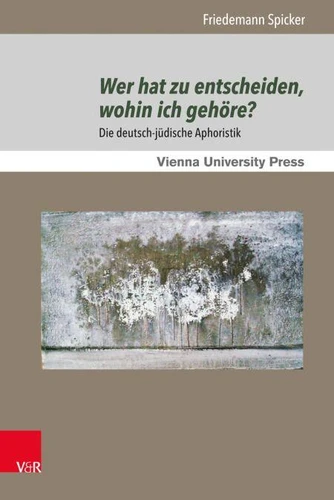
Wer hat zu entscheiden, wohin ich gehöre?. Die deutsch-jüdische Aphoristik
Par :Formats :
Disponible dans votre compte client Decitre ou Furet du Nord dès validation de votre commande. Le format PDF est :
- Compatible avec une lecture sur My Vivlio (smartphone, tablette, ordinateur)
- Compatible avec une lecture sur liseuses Vivlio
- Pour les liseuses autres que Vivlio, vous devez utiliser le logiciel Adobe Digital Edition. Non compatible avec la lecture sur les liseuses Kindle, Remarkable et Sony
 , qui est-ce ?
Notre partenaire de plateforme de lecture numérique où vous retrouverez l'ensemble de vos ebooks gratuitement
Pour en savoir plus sur nos ebooks, consultez notre aide en ligne ici
C'est si simple ! Lisez votre ebook avec l'app Vivlio sur votre tablette, mobile ou ordinateur :

- Nombre de pages202
- FormatPDF
- ISBN978-3-8470-0711-1
- EAN9783847007111
- Date de parution13/03/2017
- Protection num.pas de protection
- Taille5 Mo
- Infos supplémentairespdf
- ÉditeurV&R Unipress
Résumé
German-Jewish aphorists depict the self-understanding of German Jews in all its contradictory diversity, from Western Jewish liberalism to orthodoxy, from solidarity to demarcation, from straightforward assimilation to Zionism and Jewish-Israeli national consciousness. The biographical character in question portrays a tense and grievously experienced duality. The phenomenon concerning the reflection from the outside ought not to be neglected.
As far as implication is concerned, aphorism is undoubtedly "not a Jewish invention" (Kunert). Nevertheless, many constitutive elements of the genre encounter a specific disposition: introspection, which feeds off the aggression of its surroundings, the provocative wit of the one who believes himself to have been deemed an outsider, scepticism and disillusionism, paradox and dialectics, as well as the relationship to writing and language.
As far as implication is concerned, aphorism is undoubtedly "not a Jewish invention" (Kunert). Nevertheless, many constitutive elements of the genre encounter a specific disposition: introspection, which feeds off the aggression of its surroundings, the provocative wit of the one who believes himself to have been deemed an outsider, scepticism and disillusionism, paradox and dialectics, as well as the relationship to writing and language.