SOLDES
Jusqu'à -70% sur une sélection d'articles*

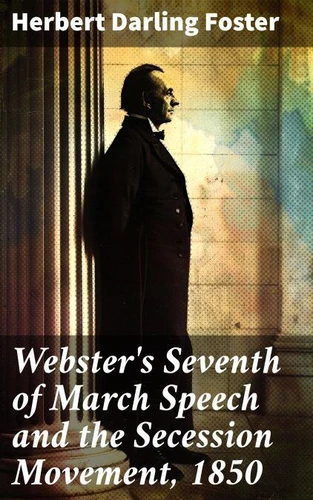
Webster's Seventh of March Speech and the Secession Movement, 1850. The Impact of Political Rhetoric on a Nation Divided
Par :Formats :
Disponible dans votre compte client Decitre ou Furet du Nord dès validation de votre commande. Le format ePub est :
- Compatible avec une lecture sur My Vivlio (smartphone, tablette, ordinateur)
- Compatible avec une lecture sur liseuses Vivlio
- Pour les liseuses autres que Vivlio, vous devez utiliser le logiciel Adobe Digital Edition. Non compatible avec la lecture sur les liseuses Kindle, Remarkable et Sony
 , qui est-ce ?
Notre partenaire de plateforme de lecture numérique où vous retrouverez l'ensemble de vos ebooks gratuitement
Pour en savoir plus sur nos ebooks, consultez notre aide en ligne ici
C'est si simple ! Lisez votre ebook avec l'app Vivlio sur votre tablette, mobile ou ordinateur :

- Nombre de pages36
- FormatePub
- ISBN859-65--4752264-5
- EAN8596547522645
- Date de parution22/08/2023
- Protection num.Digital Watermarking
- Taille532 Ko
- Infos supplémentairesepub
- ÉditeurGOOD PRESS
Résumé
In "Webster's Seventh of March Speech and the Secession Movement, 1850, " Herbert Darling Foster meticulously examines the pivotal address delivered by Daniel Webster amidst the escalating tensions leading to the Civil War. Foster's analytical prose and historical insights delve into the speech's political implications, revealing how Webster'Äôs appeal for national unity and compromise reflected the broader societal debates surrounding slavery and secession.
Contextually, the book situates Webster's words within the fraught political landscape of the 1850s, illustrating how his rhetorical strategies were both a product of their time and an influential force in shaping American thought on federalism and state rights. Herbert Darling Foster, a distinguished historian and scholar, drew on his extensive knowledge of American political history to craft this nuanced exploration.
His background in analyzing antebellum rhetoric and the socio-political dynamics of the era informs his interpretation of Webster's role as a reluctant champion of unity amidst a fractious climate. Foster's passion for understanding the complexities of historical narratives propels his assessment of Webster'Äôs speech as not merely an oratorical masterpiece but also as a manifestation of the tumultuous spirit of the age.
For those engaged with American history, particularly the antebellum period, Foster's work is indispensable. It provides a rich, contextual understanding of one of the most significant speeches in American legislative history, illuminating its connection to the secession movement. Readers will find their appreciation for the intricate interplay of rhetoric and politics deepened through Foster'Äôs incisive examination.
Contextually, the book situates Webster's words within the fraught political landscape of the 1850s, illustrating how his rhetorical strategies were both a product of their time and an influential force in shaping American thought on federalism and state rights. Herbert Darling Foster, a distinguished historian and scholar, drew on his extensive knowledge of American political history to craft this nuanced exploration.
His background in analyzing antebellum rhetoric and the socio-political dynamics of the era informs his interpretation of Webster's role as a reluctant champion of unity amidst a fractious climate. Foster's passion for understanding the complexities of historical narratives propels his assessment of Webster'Äôs speech as not merely an oratorical masterpiece but also as a manifestation of the tumultuous spirit of the age.
For those engaged with American history, particularly the antebellum period, Foster's work is indispensable. It provides a rich, contextual understanding of one of the most significant speeches in American legislative history, illuminating its connection to the secession movement. Readers will find their appreciation for the intricate interplay of rhetoric and politics deepened through Foster'Äôs incisive examination.