
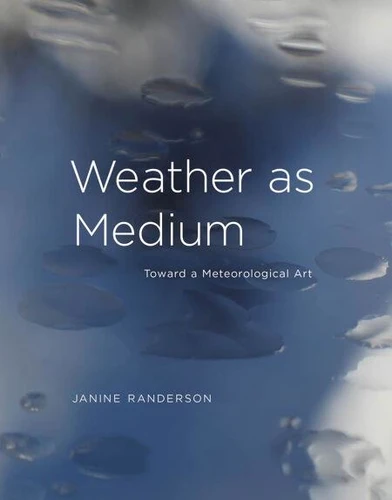
Weather as Medium. Toward a Meteorological Art
Par :Formats :
Disponible dans votre compte client Decitre ou Furet du Nord dès validation de votre commande. Le format ePub protégé est :
- Compatible avec une lecture sur My Vivlio (smartphone, tablette, ordinateur)
- Compatible avec une lecture sur liseuses Vivlio
- Pour les liseuses autres que Vivlio, vous devez utiliser le logiciel Adobe Digital Edition. Non compatible avec la lecture sur les liseuses Kindle, Remarkable et Sony
- Non compatible avec un achat hors France métropolitaine
 , qui est-ce ?
Notre partenaire de plateforme de lecture numérique où vous retrouverez l'ensemble de vos ebooks gratuitement
Pour en savoir plus sur nos ebooks, consultez notre aide en ligne ici
C'est si simple ! Lisez votre ebook avec l'app Vivlio sur votre tablette, mobile ou ordinateur :

- Nombre de pages280
- FormatePub
- ISBN978-0-262-35345-8
- EAN9780262353458
- Date de parution30/10/2018
- Protection num.Adobe DRM
- Taille5 Mo
- Infos supplémentairesepub
- ÉditeurThe MIT Press
Résumé
An exploration of artworks that use weather or atmosphere as the primary medium, creating new coalitions of collective engagement with the climate crisis. In a time of climate crisis, a growing number of artists use weather or atmosphere as an artistic medium, collaborating with scientists, local communities, and climate activists. Their work mediates scientific modes of knowing and experiential knowledge of weather, probing collective anxieties and raising urgent ecological questions, oscillating between the "big picture systems view" and a ground-based perspective.
In this book, Janine Randerson explores a series of meteorological art projects from the 1960s to the present that draw on sources ranging from dynamic, technological, and physical systems to indigenous cosmology. Randerson finds a precursor to today's meteorological art in 1960s artworks that were weather-driven and infused with the new sciences of chaos and indeterminacy, and she examines work from this period by artists including Hans Haacke, Fujiko Nakaya, and Aotearoa-New Zealand kinetic sculptor Len Lye.
She looks at live experiences of weather in art, in particular Fluxus performance and contemporary art that makes use of meteorological data streams and software. She describes the use of meteorological instruments, including remote satellite sensors, to create affective atmospheres; online projects and participatory performances that create a new form of "social meteorology"; works that respond directly to climate change, many from the Global South; artist-activists who engage with the earth's diminishing cryosphere; and a speculative art in the form of quasi-scientific experiments.
Art's current eddies of activity around the weather, Randerson writes, perturb the scientific hold on facts and offer questions of value in their place.
In this book, Janine Randerson explores a series of meteorological art projects from the 1960s to the present that draw on sources ranging from dynamic, technological, and physical systems to indigenous cosmology. Randerson finds a precursor to today's meteorological art in 1960s artworks that were weather-driven and infused with the new sciences of chaos and indeterminacy, and she examines work from this period by artists including Hans Haacke, Fujiko Nakaya, and Aotearoa-New Zealand kinetic sculptor Len Lye.
She looks at live experiences of weather in art, in particular Fluxus performance and contemporary art that makes use of meteorological data streams and software. She describes the use of meteorological instruments, including remote satellite sensors, to create affective atmospheres; online projects and participatory performances that create a new form of "social meteorology"; works that respond directly to climate change, many from the Global South; artist-activists who engage with the earth's diminishing cryosphere; and a speculative art in the form of quasi-scientific experiments.
Art's current eddies of activity around the weather, Randerson writes, perturb the scientific hold on facts and offer questions of value in their place.