
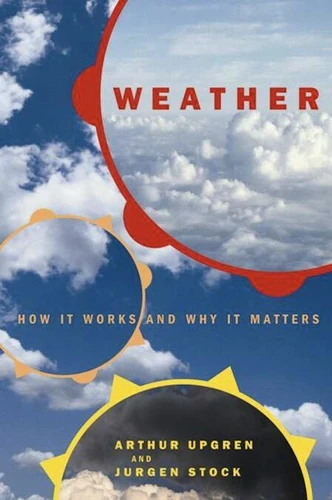
Weather. How It Works And Why It Matters
Par :Formats :
Disponible dans votre compte client Decitre ou Furet du Nord dès validation de votre commande. Le format ePub protégé est :
- Compatible avec une lecture sur My Vivlio (smartphone, tablette, ordinateur)
- Compatible avec une lecture sur liseuses Vivlio
- Pour les liseuses autres que Vivlio, vous devez utiliser le logiciel Adobe Digital Edition. Non compatible avec la lecture sur les liseuses Kindle, Remarkable et Sony
- Non compatible avec un achat hors France métropolitaine
 , qui est-ce ?
Notre partenaire de plateforme de lecture numérique où vous retrouverez l'ensemble de vos ebooks gratuitement
Pour en savoir plus sur nos ebooks, consultez notre aide en ligne ici
C'est si simple ! Lisez votre ebook avec l'app Vivlio sur votre tablette, mobile ou ordinateur :

- Nombre de pages240
- FormatePub
- ISBN978-0-465-01222-0
- EAN9780465012220
- Date de parution06/01/2008
- Protection num.Adobe DRM
- Infos supplémentairesepub
- ÉditeurBasic Books
Résumé
Scientists have delved deep into the smallest particles of matter and have extended their view to the far reaches of the universe, but still seem unable to predict the temperature five days hence. In this intriguing book, two scientists examine recent progress in the fields of meteorology and climatology. Amid colorful anecdotes of the Galapagos, Siberia, and places closer to home, they describe the earth's atmosphere, its origin and structure, and the forces that have shaped and continue to affect it.
They explore temperature, pressure, and other properties of air and weather, including warm and cold fronts, highs and lows, clouds, trade winds, prevailing westerlies, and sky phenomena such as rainbows, halos, coronae, and sun dogs. The authors end with a discussion of the major threats to earth's atmosphere brought on by human activity, including global warming and ozone depletion, and argue that pure science -- not politics -- should dictate our policy responses.
They explore temperature, pressure, and other properties of air and weather, including warm and cold fronts, highs and lows, clouds, trade winds, prevailing westerlies, and sky phenomena such as rainbows, halos, coronae, and sun dogs. The authors end with a discussion of the major threats to earth's atmosphere brought on by human activity, including global warming and ozone depletion, and argue that pure science -- not politics -- should dictate our policy responses.