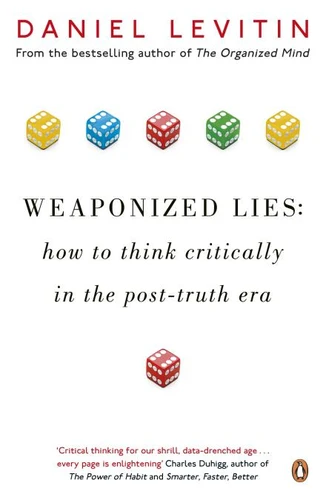
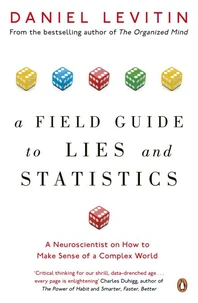
A guide to critical thinking in the 'post-truth' era, from the author of Sunday Times best-seller The Organized Mind We live in a world where the line between truth and lies is increasingly blurred by euphemistic terms such as 'post-truth', 'counter-knowledge', 'fringe theories' and others. In a world where anyone can become an expert at the click of a button, we're worse equipped than ever to evaluate the information we encounter and separate the truth from the lies.
Daniel Levitin debunks the idea that truth no longer exists, and shows that we urgently need to learn the skills toeffectively ask ourselves: can we really know that? And how do they know that? In this eye-opening, accessible guide filled with fascinating examples and practical takeaways, acclaimed neuroscientist Daniel Levitin shows us how learning to understand statistics will enable you to make better, smarter judgements on the world around you.
A guide to critical thinking in the 'post-truth' era, from the author of Sunday Times best-seller The Organized Mind We live in a world where the line between truth and lies is increasingly blurred by euphemistic terms such as 'post-truth', 'counter-knowledge', 'fringe theories' and others. In a world where anyone can become an expert at the click of a button, we're worse equipped than ever to evaluate the information we encounter and separate the truth from the lies.
Daniel Levitin debunks the idea that truth no longer exists, and shows that we urgently need to learn the skills toeffectively ask ourselves: can we really know that? And how do they know that? In this eye-opening, accessible guide filled with fascinating examples and practical takeaways, acclaimed neuroscientist Daniel Levitin shows us how learning to understand statistics will enable you to make better, smarter judgements on the world around you.