
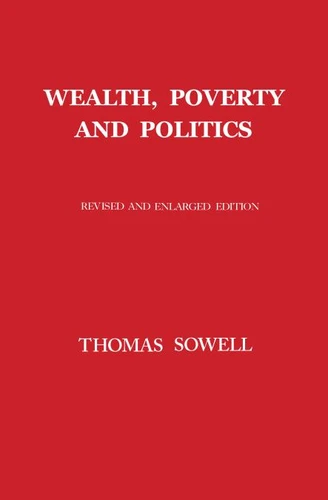
Wealth, Poverty and Politics
Par :Formats :
Disponible dans votre compte client Decitre ou Furet du Nord dès validation de votre commande. Le format ePub protégé est :
- Compatible avec une lecture sur My Vivlio (smartphone, tablette, ordinateur)
- Compatible avec une lecture sur liseuses Vivlio
- Pour les liseuses autres que Vivlio, vous devez utiliser le logiciel Adobe Digital Edition. Non compatible avec la lecture sur les liseuses Kindle, Remarkable et Sony
- Non compatible avec un achat hors France métropolitaine
 , qui est-ce ?
Notre partenaire de plateforme de lecture numérique où vous retrouverez l'ensemble de vos ebooks gratuitement
Pour en savoir plus sur nos ebooks, consultez notre aide en ligne ici
C'est si simple ! Lisez votre ebook avec l'app Vivlio sur votre tablette, mobile ou ordinateur :

- Nombre de pages576
- FormatePub
- ISBN978-0-465-09677-0
- EAN9780465096770
- Date de parution05/09/2016
- Protection num.Adobe DRM
- Infos supplémentairesepub
- ÉditeurBasic Books
Résumé
In Wealth, Poverty, and Politics, Thomas Sowell, one of the foremost conservative public intellectuals in this country, argues that political and ideological struggles have led to dangerous confusion about income inequality in America. Pundits and politically motivated economists trumpet ambiguous statistics and sensational theories while ignoring the true determinant of income inequality: the production of wealth.
We cannot properly understand inequality if we focus exclusively on the distribution of wealth and ignore wealth production factors such as geography, demography, and culture. Sowell contends that liberals have a particular interest in misreading the data and chastises them for using income inequality as an argument for the welfare state. Refuting Thomas Piketty, Paul Krugman, and others on the left, Sowell draws on accurate empirical data to show that the inequality is not nearly as extreme or sensational as we have been led to believe.
Transcending partisanship through a careful examination of data, Wealth, Poverty, and Politics reveals the truth about the most explosive political issue of our time.
We cannot properly understand inequality if we focus exclusively on the distribution of wealth and ignore wealth production factors such as geography, demography, and culture. Sowell contends that liberals have a particular interest in misreading the data and chastises them for using income inequality as an argument for the welfare state. Refuting Thomas Piketty, Paul Krugman, and others on the left, Sowell draws on accurate empirical data to show that the inequality is not nearly as extreme or sensational as we have been led to believe.
Transcending partisanship through a careful examination of data, Wealth, Poverty, and Politics reveals the truth about the most explosive political issue of our time.
A propos de Thomas Sowell
32,90 €

Racce And Culture
E-book
12,99 €

13,99 €
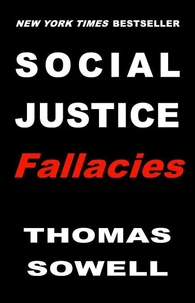
Social Justice Fallacies
E-book
14,99 €

11,99 €

14,99 €
14,99 €
19,99 €
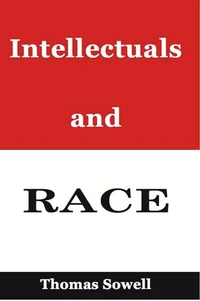
Intellectuals and Race
E-book
15,99 €
14,99 €
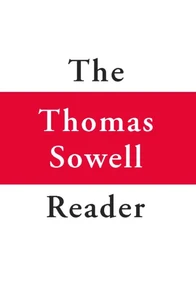
The Thomas Sowell Reader
E-book
15,99 €
10,99 €

14,99 €
9,99 €
18,99 €