SOLDES
Jusqu'à -70% sur une sélection d'articles*

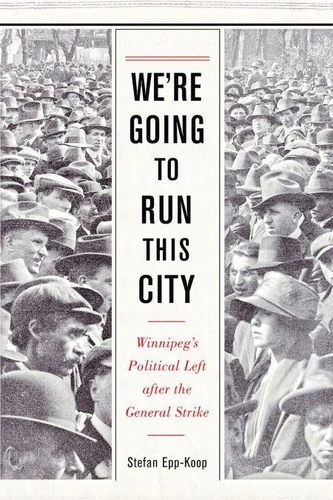
We’re Going to Run This City. Winnipeg's Political Left after the General Strike
Par :Formats :
Disponible dans votre compte client Decitre ou Furet du Nord dès validation de votre commande. Le format ePub est :
- Compatible avec une lecture sur My Vivlio (smartphone, tablette, ordinateur)
- Compatible avec une lecture sur liseuses Vivlio
- Pour les liseuses autres que Vivlio, vous devez utiliser le logiciel Adobe Digital Edition. Non compatible avec la lecture sur les liseuses Kindle, Remarkable et Sony
 , qui est-ce ?
Notre partenaire de plateforme de lecture numérique où vous retrouverez l'ensemble de vos ebooks gratuitement
Pour en savoir plus sur nos ebooks, consultez notre aide en ligne ici
C'est si simple ! Lisez votre ebook avec l'app Vivlio sur votre tablette, mobile ou ordinateur :

- Nombre de pages216
- FormatePub
- ISBN978-0-88755-473-5
- EAN9780887554735
- Date de parution11/09/2015
- Protection num.Digital Watermarking
- Taille2 Mo
- Infos supplémentairesepub
- ÉditeurUniversity of Manitoba Press
Résumé
Stefan Epp-Koop's We're Going to Run This City: Winnipeg's Political Left After the General Strike explores the dynamic political movement that came out of the largest labour protest in Canadian history and the ramifications for Winnipeg throughout the 1920s and 1930s. Few have studied the political Left at the municipal level-even though it is at this grassroots level that many people participate in political activity.
Winnipeg was a deeply divided city. On one side, the conservative political descendants of the General Strike's Citizen's Committee of 1000 advocated for minimal government and low taxes. On the other side were the Independent Labour Party and the Communist Party of Canada, two parties rooted in the city's working class, though often in conflict with each other. The political strength of the Left would ebb and flow throughout the 1920s and 1930s but peaked in the mid-1930s when the ILP's John Queen became mayor and the two parties on the Left combined to hold a majority of council seats.
Astonishingly, Winnipeg was governed by a mayor who had served jail time for his role in the General Strike.
Winnipeg was a deeply divided city. On one side, the conservative political descendants of the General Strike's Citizen's Committee of 1000 advocated for minimal government and low taxes. On the other side were the Independent Labour Party and the Communist Party of Canada, two parties rooted in the city's working class, though often in conflict with each other. The political strength of the Left would ebb and flow throughout the 1920s and 1930s but peaked in the mid-1930s when the ILP's John Queen became mayor and the two parties on the Left combined to hold a majority of council seats.
Astonishingly, Winnipeg was governed by a mayor who had served jail time for his role in the General Strike.