SOLDES
Jusqu'à -70% sur une sélection d'articles*

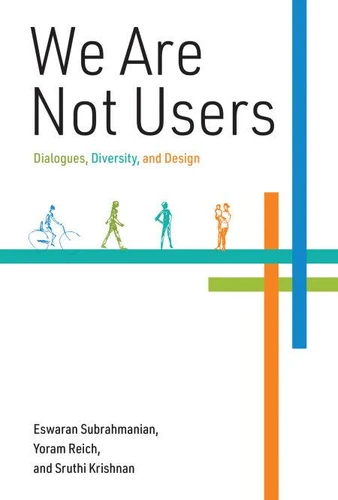
We Are Not Users. Dialogues, Diversity, and Design
Par : , ,Formats :
Disponible dans votre compte client Decitre ou Furet du Nord dès validation de votre commande. Le format ePub protégé est :
- Compatible avec une lecture sur My Vivlio (smartphone, tablette, ordinateur)
- Compatible avec une lecture sur liseuses Vivlio
- Pour les liseuses autres que Vivlio, vous devez utiliser le logiciel Adobe Digital Edition. Non compatible avec la lecture sur les liseuses Kindle, Remarkable et Sony
- Non compatible avec un achat hors France métropolitaine
 , qui est-ce ?
Notre partenaire de plateforme de lecture numérique où vous retrouverez l'ensemble de vos ebooks gratuitement
Pour en savoir plus sur nos ebooks, consultez notre aide en ligne ici
C'est si simple ! Lisez votre ebook avec l'app Vivlio sur votre tablette, mobile ou ordinateur :

- Nombre de pages200
- FormatePub
- ISBN978-0-262-35648-0
- EAN9780262356480
- Date de parution17/03/2020
- Protection num.Adobe DRM
- Taille2 Mo
- Infos supplémentairesepub
- ÉditeurThe MIT Press
Résumé
A call to reclaim and rethink the field of designing as a liberal art where diverse voices come together to shape the material world. We live in a material world of designed artifacts, both digital and analog. We think of ourselves as users; the platforms, devices, or objects provide a service that we can use. But is this really the case? We Are Not Users argues that people cannot be reduced to the entity called "user"; we are not homogenous but diverse.
That buzz of dissonance that we hear reflects the difficulty of condensing our diversity into "one size fits all." This book proposes that a new understanding of design could resolve that dissonance, and issues a call to reclaim and rethink the field of designing as a liberal art where diverse voices come together to shape the material world. The authors envision designing as a dialogue, simultaneously about the individual and the social-an act enriched by diversity of both disciplines and perspectives.
The book presents the building blocks of a language that can conceive designing in all its richness, with relevance for both theory and practice. It introduces a theoretical model, terminology, examples, and a framework for bringing together the social, cultural, and political aspects of designing. It will be essential reading for design theorists and for designers in areas ranging from architecture to software design and policymaking.
That buzz of dissonance that we hear reflects the difficulty of condensing our diversity into "one size fits all." This book proposes that a new understanding of design could resolve that dissonance, and issues a call to reclaim and rethink the field of designing as a liberal art where diverse voices come together to shape the material world. The authors envision designing as a dialogue, simultaneously about the individual and the social-an act enriched by diversity of both disciplines and perspectives.
The book presents the building blocks of a language that can conceive designing in all its richness, with relevance for both theory and practice. It introduces a theoretical model, terminology, examples, and a framework for bringing together the social, cultural, and political aspects of designing. It will be essential reading for design theorists and for designers in areas ranging from architecture to software design and policymaking.