
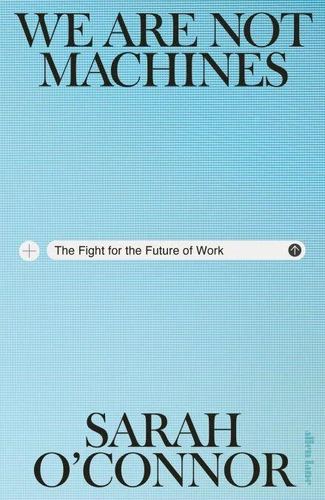
We Are Not Machines. The Fight for the Future of Work
Par :Formats :
Disponible dans votre compte client Decitre ou Furet du Nord dès validation de votre commande. Le format ePub protégé est :
- Compatible avec une lecture sur My Vivlio (smartphone, tablette, ordinateur)
- Compatible avec une lecture sur liseuses Vivlio
- Pour les liseuses autres que Vivlio, vous devez utiliser le logiciel Adobe Digital Edition. Non compatible avec la lecture sur les liseuses Kindle, Remarkable et Sony
- Non compatible avec un achat hors France métropolitaine
 , qui est-ce ?
Notre partenaire de plateforme de lecture numérique où vous retrouverez l'ensemble de vos ebooks gratuitement
Pour en savoir plus sur nos ebooks, consultez notre aide en ligne ici
C'est si simple ! Lisez votre ebook avec l'app Vivlio sur votre tablette, mobile ou ordinateur :

- Nombre de pages256
- FormatePub
- ISBN978-1-80206-634-0
- EAN9781802066340
- Date de parution04/06/2026
- Protection num.Adobe DRM
- Infos supplémentairesepub
- ÉditeurPenguin
Résumé
'Sarah is one of the few people who really understands how AI is changing the character of work already and what it means for all of us' David Runciman'Original and enlightening... Not many books about the labour market make you laugh and bring tears to your eyes' Emma Duncan, The Times From award-winning Financial Times journalist Sarah O'Connor, a deeply reported investigation into how AI is transforming our working lives in unpredictable waysA tsunami of change, we are told, is sweeping the economy, as robots and AI threaten to take over tasks done by humans.
But while we worry that we're robotizing our work, what if the bigger risk is that we're robotizing ourselves? When prize-winning Financial Times journalist Sarah O'Connor set out to investigate what was happening on the ground, she met people who weren't necessarily losing their jobs to machines, but who felt they were losing something, nonetheless. Because the quantity of work is not the only thing at stake in times of rapid technological change.
So is its quality. From TV subtitle translators reduced to editing AI output to warehouse workers surrounded by robots and graduates interviewed by machines, O'Connor found stories of work becoming more intense, more lonely, less creative, less human. But she also investigated hopeful instances of work being made better, safer and more enjoyable - stories in which people have been able to make the machines work for them, rather than the other way around.
Her reporting shows that the way our tools change our work - and ourselves - is shaped by power, design, culture, institutions and ideas. As a result, the outcome is not pre-determined but must be contested by us all. Inspired by stories from nineteenth-century English cotton mills to twenty-first century Swedish mines, We Are Not Machines reveals how we can fight for work which is more respectful of our limits, and more worthy of our minds.
But while we worry that we're robotizing our work, what if the bigger risk is that we're robotizing ourselves? When prize-winning Financial Times journalist Sarah O'Connor set out to investigate what was happening on the ground, she met people who weren't necessarily losing their jobs to machines, but who felt they were losing something, nonetheless. Because the quantity of work is not the only thing at stake in times of rapid technological change.
So is its quality. From TV subtitle translators reduced to editing AI output to warehouse workers surrounded by robots and graduates interviewed by machines, O'Connor found stories of work becoming more intense, more lonely, less creative, less human. But she also investigated hopeful instances of work being made better, safer and more enjoyable - stories in which people have been able to make the machines work for them, rather than the other way around.
Her reporting shows that the way our tools change our work - and ourselves - is shaped by power, design, culture, institutions and ideas. As a result, the outcome is not pre-determined but must be contested by us all. Inspired by stories from nineteenth-century English cotton mills to twenty-first century Swedish mines, We Are Not Machines reveals how we can fight for work which is more respectful of our limits, and more worthy of our minds.