SOLDES
Jusqu'à -70% sur une sélection d'articles*

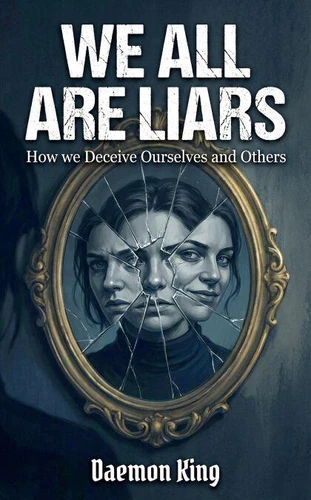
We All Are Liars: How We Deceive Ourselves and Others
Par :Formats :
Disponible dans votre compte client Decitre ou Furet du Nord dès validation de votre commande. Le format ePub est :
- Compatible avec une lecture sur My Vivlio (smartphone, tablette, ordinateur)
- Compatible avec une lecture sur liseuses Vivlio
- Pour les liseuses autres que Vivlio, vous devez utiliser le logiciel Adobe Digital Edition. Non compatible avec la lecture sur les liseuses Kindle, Remarkable et Sony
 , qui est-ce ?
Notre partenaire de plateforme de lecture numérique où vous retrouverez l'ensemble de vos ebooks gratuitement
Pour en savoir plus sur nos ebooks, consultez notre aide en ligne ici
C'est si simple ! Lisez votre ebook avec l'app Vivlio sur votre tablette, mobile ou ordinateur :

- FormatePub
- ISBN8232236595
- EAN9798232236595
- Date de parution07/12/2025
- Protection num.pas de protection
- Infos supplémentairesepub
- ÉditeurDraft2Digital
Résumé
We all lie. Every day, in ways both conscious and unconscious, we deceive ourselves and others. This book examines why. Drawing on evolutionary biology, neuroscience, and social psychology, it explores how deception evolved as a human survival mechanism, why our memories constantly reconstruct the past, and how cognitive dissonance shapes the stories we tell ourselves. It investigates the social lies that maintain relationships, the professional personas we construct for success, and the digital identities we curate online.
The book also confronts darker deceptions: gaslighting, manipulation tactics, pathological lying, and institutional fraud. It examines the psychological trauma caused by systematic lying and when deception crosses from social tool to weapon. The final section offers practical frameworks for living more authentically while accepting that perfect honesty is impossible. It provides techniques for self-awareness, honest communication, and building cultures where truth can exist alongside necessary social fiction.
The book also confronts darker deceptions: gaslighting, manipulation tactics, pathological lying, and institutional fraud. It examines the psychological trauma caused by systematic lying and when deception crosses from social tool to weapon. The final section offers practical frameworks for living more authentically while accepting that perfect honesty is impossible. It provides techniques for self-awareness, honest communication, and building cultures where truth can exist alongside necessary social fiction.
A propos de Daemon King



2,99 €