SOLDES
Jusqu'à -70% sur une sélection d'articles*
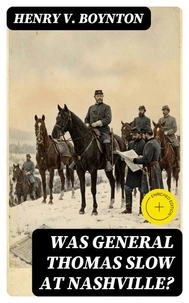
Was General Thomas Slow at Nashville?. With a Description of the Greatest Cavalry Movement of the War and General James H. Wilson's Cavalry Operations in Tennessee, Alabama, and Georgia
Par :Formats :
Disponible dans votre compte client Decitre ou Furet du Nord dès validation de votre commande. Le format ePub est :
- Compatible avec une lecture sur My Vivlio (smartphone, tablette, ordinateur)
- Compatible avec une lecture sur liseuses Vivlio
- Pour les liseuses autres que Vivlio, vous devez utiliser le logiciel Adobe Digital Edition. Non compatible avec la lecture sur les liseuses Kindle, Remarkable et Sony
 , qui est-ce ?
Notre partenaire de plateforme de lecture numérique où vous retrouverez l'ensemble de vos ebooks gratuitement
Pour en savoir plus sur nos ebooks, consultez notre aide en ligne ici
C'est si simple ! Lisez votre ebook avec l'app Vivlio sur votre tablette, mobile ou ordinateur :

- Nombre de pages153
- FormatePub
- ISBN406-4-06-616014-2
- EAN4064066160142
- Date de parution18/12/2019
- Protection num.Digital Watermarking
- Taille557 Ko
- Infos supplémentairesepub
- ÉditeurGOOD PRESS
Résumé
In "Was General Thomas Slow at Nashville?", Henry V. Boynton delves into a critical evaluation of one of the Civil War's most debated military figures, General George H. Thomas. Offering a meticulous analysis of the Nashville Campaign of 1864, Boynton employs a blend of primary sources, military strategy, and historical context to dissect accusations against Thomas regarding his tactical tempo. The literary style is analytical yet narrative, weaving together personal anecdotes and military records to illuminate the complexities of command decisions during a pivotal confrontation.
Boynton's work not only contributes to the understanding of Thomas's character and competence but also engages in broader dialogues about leadership in wartime, timely and relevant to ongoing discussions in military history. Henry V. Boynton, a prominent historian and Union veteran, brings his extensive background in military affairs to this work, driven by a passion for honoring the often-unacknowledged contributions of Civil War generals.
His extensive research is rooted in firsthand experiences and interactions with participants of notable campaigns, which shaped his perspective. Boynton's dual role as a soldier and historian naturally influenced his meticulous attention to the nuances of military operations and the reputational legacies of commanders. For readers interested in Civil War history, military strategy, or the complexities of leadership, Boynton's work serves as an essential exploration into Thomas's legacy.
It challenges readers to consider not just the heroics of war but the often-overlooked struggles of decision-making under pressure, making it a valuable addition to both academic and personal libraries.
Boynton's work not only contributes to the understanding of Thomas's character and competence but also engages in broader dialogues about leadership in wartime, timely and relevant to ongoing discussions in military history. Henry V. Boynton, a prominent historian and Union veteran, brings his extensive background in military affairs to this work, driven by a passion for honoring the often-unacknowledged contributions of Civil War generals.
His extensive research is rooted in firsthand experiences and interactions with participants of notable campaigns, which shaped his perspective. Boynton's dual role as a soldier and historian naturally influenced his meticulous attention to the nuances of military operations and the reputational legacies of commanders. For readers interested in Civil War history, military strategy, or the complexities of leadership, Boynton's work serves as an essential exploration into Thomas's legacy.
It challenges readers to consider not just the heroics of war but the often-overlooked struggles of decision-making under pressure, making it a valuable addition to both academic and personal libraries.