SOLDES
Jusqu'à -70% sur une sélection d'articles*

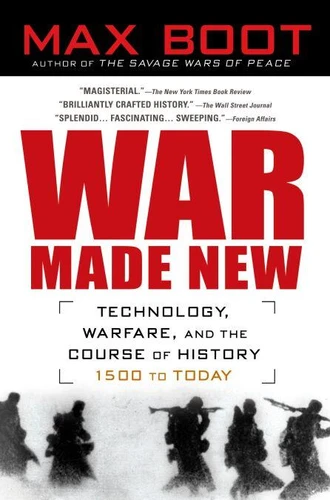
War Made New. Technology, Warfare, and the Course of History, 1500 to Today
Par :Formats :
Disponible dans votre compte client Decitre ou Furet du Nord dès validation de votre commande. Le format ePub protégé est :
- Compatible avec une lecture sur My Vivlio (smartphone, tablette, ordinateur)
- Compatible avec une lecture sur liseuses Vivlio
- Pour les liseuses autres que Vivlio, vous devez utiliser le logiciel Adobe Digital Edition. Non compatible avec la lecture sur les liseuses Kindle, Remarkable et Sony
- Non compatible avec un achat hors France métropolitaine
 , qui est-ce ?
Notre partenaire de plateforme de lecture numérique où vous retrouverez l'ensemble de vos ebooks gratuitement
Pour en savoir plus sur nos ebooks, consultez notre aide en ligne ici
C'est si simple ! Lisez votre ebook avec l'app Vivlio sur votre tablette, mobile ou ordinateur :

- Nombre de pages640
- FormatePub
- ISBN1-101-21683-2
- EAN9781101216835
- Date de parution19/10/2006
- Protection num.Adobe DRM
- Taille1 Mo
- Infos supplémentairesepub
- ÉditeurAvery
Résumé
A monumental, groundbreaking work, now in paperback, that shows how technological and strategic revolutions have transformed the battlefield Combining gripping narrative history with wide-ranging analysis, War Made New focuses on four "revolutions" in military affairs and describes how inventions ranging from gunpowder to GPS-guided air strikes have remade the field of battle-and shaped the rise and fall of empires.
War Made New begins with the Gunpowder Revolution and explains warfare's evolution from ritualistic, drawn-out engagements to much deadlier events, precipitating the rise of the modern nation-state. He next explores the triumph of steel and steam during the Industrial Revolution, showing how it powered the spread of European colonial empires. Moving into the twentieth century and the Second Industrial Revolution, Boot examines three critical clashes of World War II to illustrate how new technology such as the tank, radio, and airplane ushered in terrifying new forms of warfare and the rise of centralized, and even totalitarian, world powers.
Finally, Boot focuses on the Gulf War, the invasion of Afghanistan, and the Iraq War-arguing that even as cutting-edge technologies have made America the greatest military power in world history, advanced communications systems have allowed decentralized, "irregular" forces to become an increasingly significant threat.
War Made New begins with the Gunpowder Revolution and explains warfare's evolution from ritualistic, drawn-out engagements to much deadlier events, precipitating the rise of the modern nation-state. He next explores the triumph of steel and steam during the Industrial Revolution, showing how it powered the spread of European colonial empires. Moving into the twentieth century and the Second Industrial Revolution, Boot examines three critical clashes of World War II to illustrate how new technology such as the tank, radio, and airplane ushered in terrifying new forms of warfare and the rise of centralized, and even totalitarian, world powers.
Finally, Boot focuses on the Gulf War, the invasion of Afghanistan, and the Iraq War-arguing that even as cutting-edge technologies have made America the greatest military power in world history, advanced communications systems have allowed decentralized, "irregular" forces to become an increasingly significant threat.