SOLDES
Jusqu'à -70% sur une sélection d'articles*

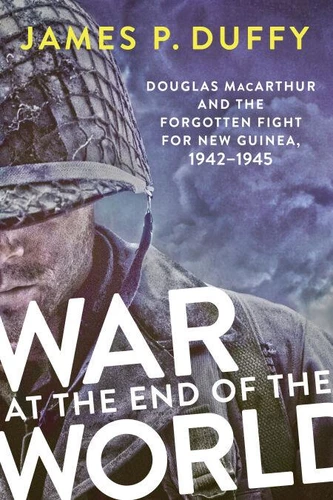
War at the End of the World. Douglas MacArthur and the Forgotten Fight For New Guinea, 1942-1945
Par :Formats :
Disponible dans votre compte client Decitre ou Furet du Nord dès validation de votre commande. Le format ePub protégé est :
- Compatible avec une lecture sur My Vivlio (smartphone, tablette, ordinateur)
- Compatible avec une lecture sur liseuses Vivlio
- Pour les liseuses autres que Vivlio, vous devez utiliser le logiciel Adobe Digital Edition. Non compatible avec la lecture sur les liseuses Kindle, Remarkable et Sony
- Non compatible avec un achat hors France métropolitaine
 , qui est-ce ?
Notre partenaire de plateforme de lecture numérique où vous retrouverez l'ensemble de vos ebooks gratuitement
Pour en savoir plus sur nos ebooks, consultez notre aide en ligne ici
C'est si simple ! Lisez votre ebook avec l'app Vivlio sur votre tablette, mobile ou ordinateur :

- Nombre de pages448
- FormatePub
- ISBN978-1-101-61109-8
- EAN9781101611098
- Date de parution05/01/2016
- Protection num.Adobe DRM
- Taille16 Mo
- Infos supplémentairesepub
- ÉditeurDutton Caliber
Résumé
A harrowing account of an epic, yet nearly forgotten, battle of World War II-General Douglas MacArthur's four-year assault on the Pacific War's most hostile battleground: the mountainous, jungle-cloaked island of New Guinea. "A meaty, engrossing narrative history. This will likely stand as the definitive account of the New Guinea campaign."-The Christian Science Monitor One American soldier called it "a green hell on earth." Monsoon-soaked wilderness, debilitating heat, impassable mountains, torrential rivers, and disease-infested swamps-New Guinea was a battleground far more deadly than the most fanatical of enemy troops.
Japanese forces numbering some 600, 000 men began landing in January 1942, determined to seize the island as a cornerstone of the Empire's strategy to knock Australia out of the war. Allied Commander-in-Chief General Douglas MacArthur committed 340, 000 Americans, as well as tens of thousands of Australian, Dutch, and New Guinea troops, to retake New Guinea at all costs. What followed was a four-year campaign that involved some of the most horrific warfare in history.
At first emboldened by easy victories throughout the Pacific, the Japanese soon encountered in New Guinea a roadblock akin to the Germans' disastrous attempt to take Moscow, a catastrophic setback to their war machine. For the Americans, victory in New Guinea was the first essential step in the long march towards the Japanese home islands and the ultimate destruction of Hirohito's empire. Winning the war in New Guinea was of critical importance to MacArthur.
His avowed "I shall return" to the Philippines could only be accomplished after taking the island. In this gripping narrative, historian James P. Duffy chronicles the most ruthless combat of the Pacific War, a fight complicated by rampant tropical disease, violent rainstorms, and unforgiving terrain that punished both Axis and Allied forces alike. Drawing on primary sources, War at the End of the World fills in a crucial gap in the history of World War II while offering readers a narrative of the first rank.
Japanese forces numbering some 600, 000 men began landing in January 1942, determined to seize the island as a cornerstone of the Empire's strategy to knock Australia out of the war. Allied Commander-in-Chief General Douglas MacArthur committed 340, 000 Americans, as well as tens of thousands of Australian, Dutch, and New Guinea troops, to retake New Guinea at all costs. What followed was a four-year campaign that involved some of the most horrific warfare in history.
At first emboldened by easy victories throughout the Pacific, the Japanese soon encountered in New Guinea a roadblock akin to the Germans' disastrous attempt to take Moscow, a catastrophic setback to their war machine. For the Americans, victory in New Guinea was the first essential step in the long march towards the Japanese home islands and the ultimate destruction of Hirohito's empire. Winning the war in New Guinea was of critical importance to MacArthur.
His avowed "I shall return" to the Philippines could only be accomplished after taking the island. In this gripping narrative, historian James P. Duffy chronicles the most ruthless combat of the Pacific War, a fight complicated by rampant tropical disease, violent rainstorms, and unforgiving terrain that punished both Axis and Allied forces alike. Drawing on primary sources, War at the End of the World fills in a crucial gap in the history of World War II while offering readers a narrative of the first rank.