
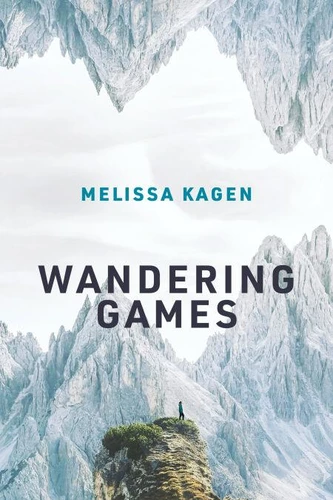
Wandering Games
Par :Formats :
Disponible dans votre compte client Decitre ou Furet du Nord dès validation de votre commande. Le format ePub protégé est :
- Compatible avec une lecture sur My Vivlio (smartphone, tablette, ordinateur)
- Compatible avec une lecture sur liseuses Vivlio
- Pour les liseuses autres que Vivlio, vous devez utiliser le logiciel Adobe Digital Edition. Non compatible avec la lecture sur les liseuses Kindle, Remarkable et Sony
- Non compatible avec un achat hors France métropolitaine
 , qui est-ce ?
Notre partenaire de plateforme de lecture numérique où vous retrouverez l'ensemble de vos ebooks gratuitement
Pour en savoir plus sur nos ebooks, consultez notre aide en ligne ici
C'est si simple ! Lisez votre ebook avec l'app Vivlio sur votre tablette, mobile ou ordinateur :

- Nombre de pages216
- FormatePub
- ISBN978-0-262-37097-4
- EAN9780262370974
- Date de parution11/10/2022
- Protection num.Adobe DRM
- Taille9 Mo
- Infos supplémentairesepub
- ÉditeurThe MIT Press
Résumé
A thought-provoking analysis of wandering within different game worlds, viewed through the lenses of work, colonialism, gender, and death-with examples from The Last of Us Part II and others. Wandering in games can be a theme, a formal mode, an aesthetic metaphor, or a player action. It can mean walking, escaping, traversing, meandering, or returning. In this book, game studies scholar Melissa Kagen introduces the concept of "wandering games, " exploring the uses of wandering in a variety of game worlds.
She shows how the much-derided Walking Simulator-a term that began as an insult, a denigration of games that are less violent, less task-oriented, or less difficult to complete-semi-accidentally tapped into something brilliant: the vast heritage and intellectual history of the concept of walking in fiction, philosophy, pilgrimage, performance, and protest. Kagen examines wandering in a series of games that vary widely in terms of genre, mechanics, themes, player base, studio size, and funding, giving close readings to Return of the Obra Dinn, Eastshade, Ritual of the Moon, 80 Days, Heaven's Vault, Death Stranding, and The Last of Us Part II.
Exploring the connotations of wandering within these different game worlds, she considers how ideologies of work, gender, colonialism, and death inflect the ways we wander through digital spaces. Overlapping and intersecting, each provides a multifaceted lens through which to understand what wandering does, lacks, implies, and offers. Kagen's account will attune game designers, players, and scholars to the myriad possibilities of the wandering ludic body.
She shows how the much-derided Walking Simulator-a term that began as an insult, a denigration of games that are less violent, less task-oriented, or less difficult to complete-semi-accidentally tapped into something brilliant: the vast heritage and intellectual history of the concept of walking in fiction, philosophy, pilgrimage, performance, and protest. Kagen examines wandering in a series of games that vary widely in terms of genre, mechanics, themes, player base, studio size, and funding, giving close readings to Return of the Obra Dinn, Eastshade, Ritual of the Moon, 80 Days, Heaven's Vault, Death Stranding, and The Last of Us Part II.
Exploring the connotations of wandering within these different game worlds, she considers how ideologies of work, gender, colonialism, and death inflect the ways we wander through digital spaces. Overlapping and intersecting, each provides a multifaceted lens through which to understand what wandering does, lacks, implies, and offers. Kagen's account will attune game designers, players, and scholars to the myriad possibilities of the wandering ludic body.